BCM111
Opinion Peice
The Influence Of Soical Media On Students And Their Academic Performence
Photo by Andrea Piacquadio on Pexels.com
Social media has woven itself into the fabric of our daily lives, especially for students. Platforms like Instagram, TikTok, and Snapchat have become indispensable, offering both opportunities and challenges. This piece explores the multifaceted impact of social media on academic performance and mental health, based on data and personal analysis.
Methodology
To investigate the impact of social media on university students’ academic performance, I will use a mixed-methods approach combining objective and subjective.This quantitative data help identify trends and correlations between social media use and academic outcomes.Open-ended questions explore personal experiences, study habits, mental health, and well-being. This qualitative data provided detailed insights and contextual understanding of the survey findings.
Social Media Usage Among Students
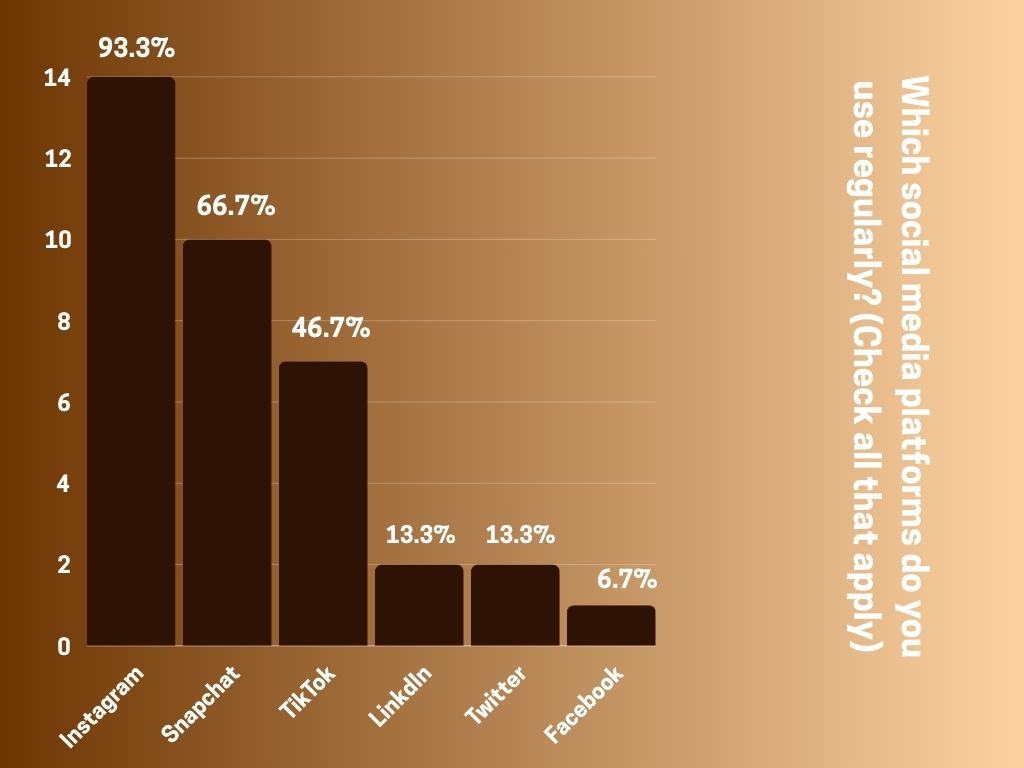
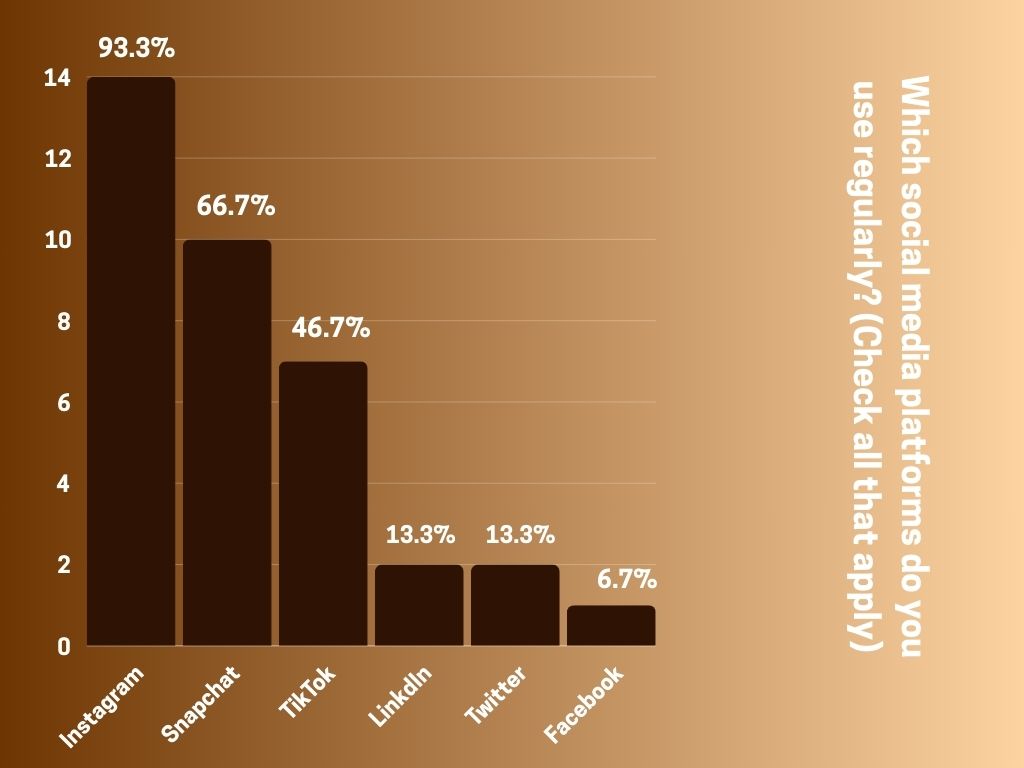
From the survey, it’s clear that Instagram is the favorite, with 93.3% of respondents using it regularly. Snapchat (66.7%) and TikTok (46.7%) are also popular, while Facebook (6.7%), Twitter (13.3%), and LinkedIn (13.3%) are on the bottom three. The preference for visual and video-based platforms indicates that students are drawn to engaging, interactive content. As such, many researchers and scholars are interested to study the impact of social media and applications on various aspects of people’s lives Bartosik-Purgat M,(2017).
Time Spent on Social Media
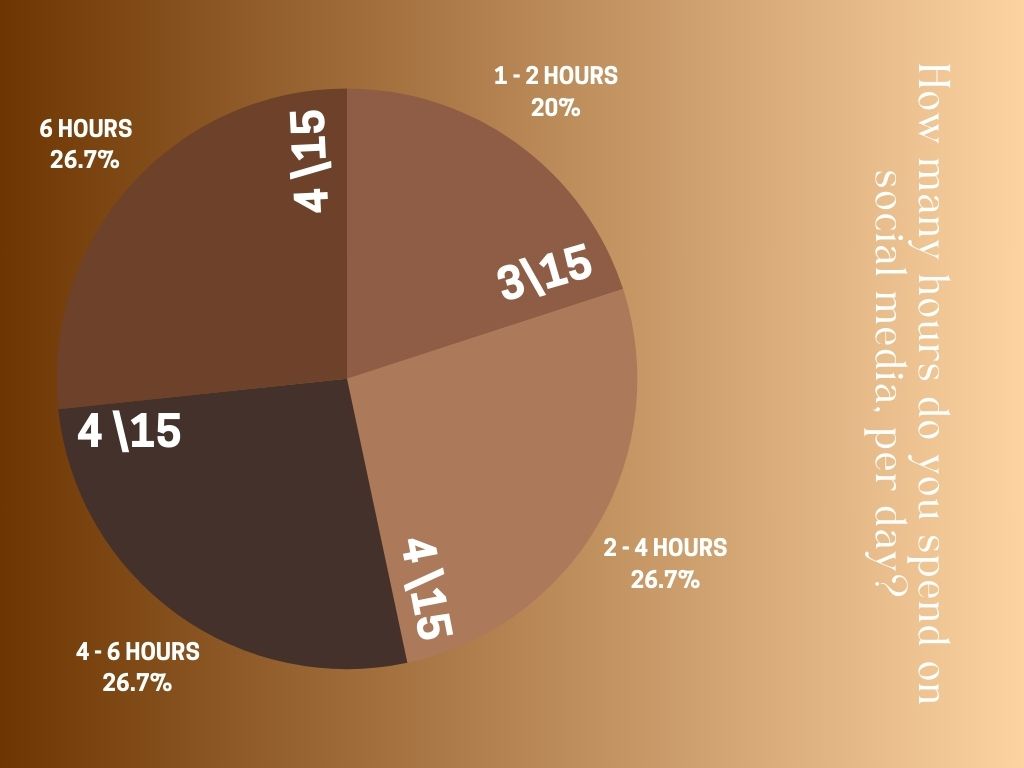
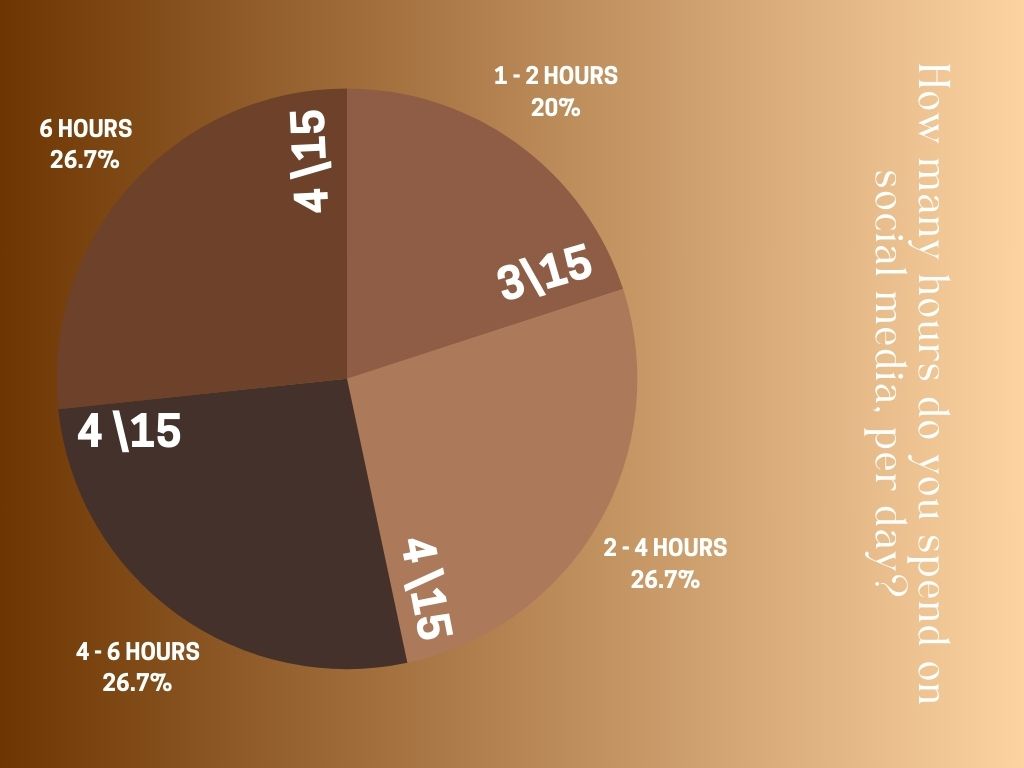
Students reported varying amounts of time spent on social media daily – 20% for 1-2 hours, 26.7% for 2-4 hours, another 26.7% for 4-6 hours, and 26.7% for more than 6 hours. This extensive usage raises questions about its impact on academic responsibilities and overall well-being.
Primary Reasons for Using Social Media
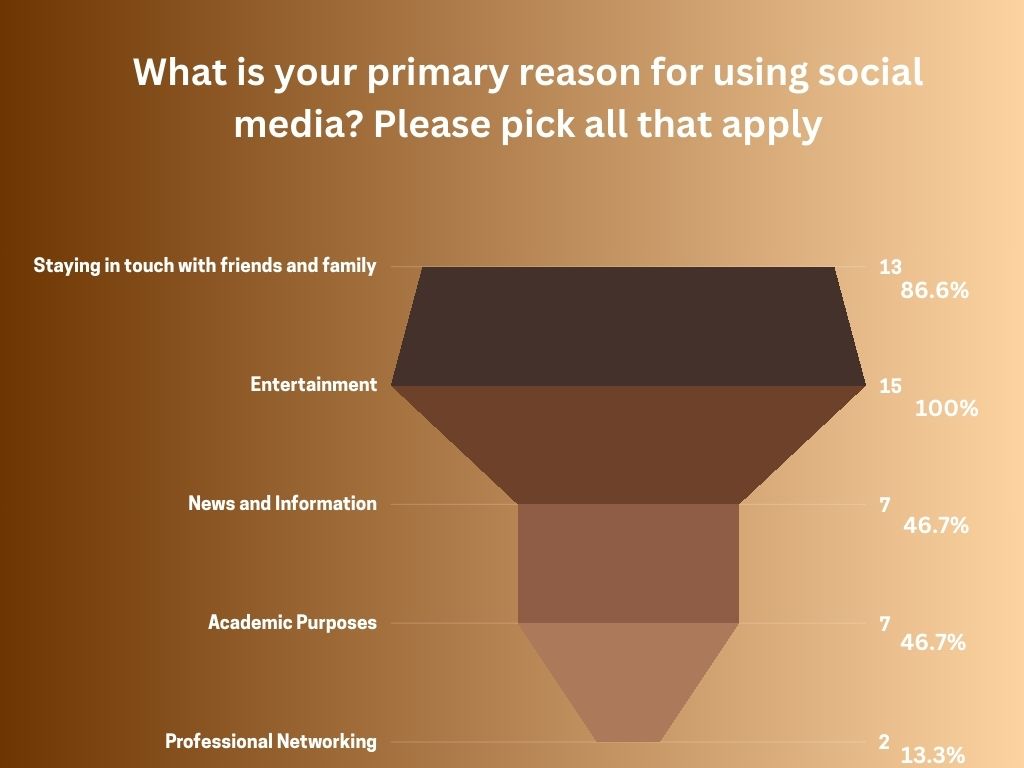
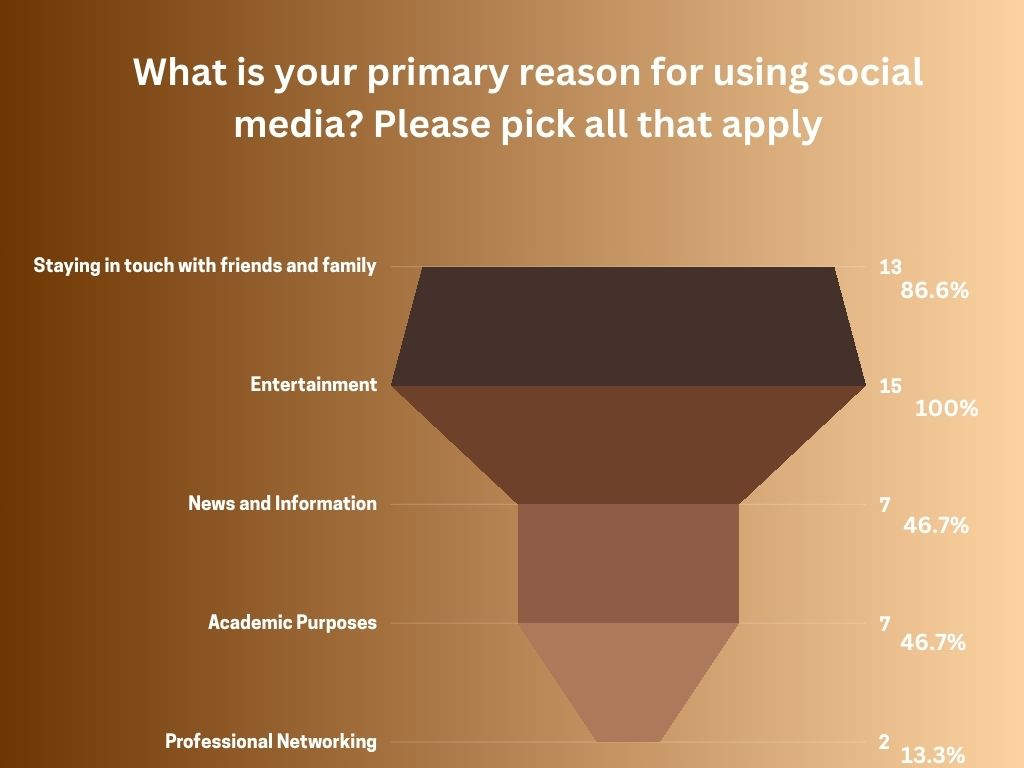
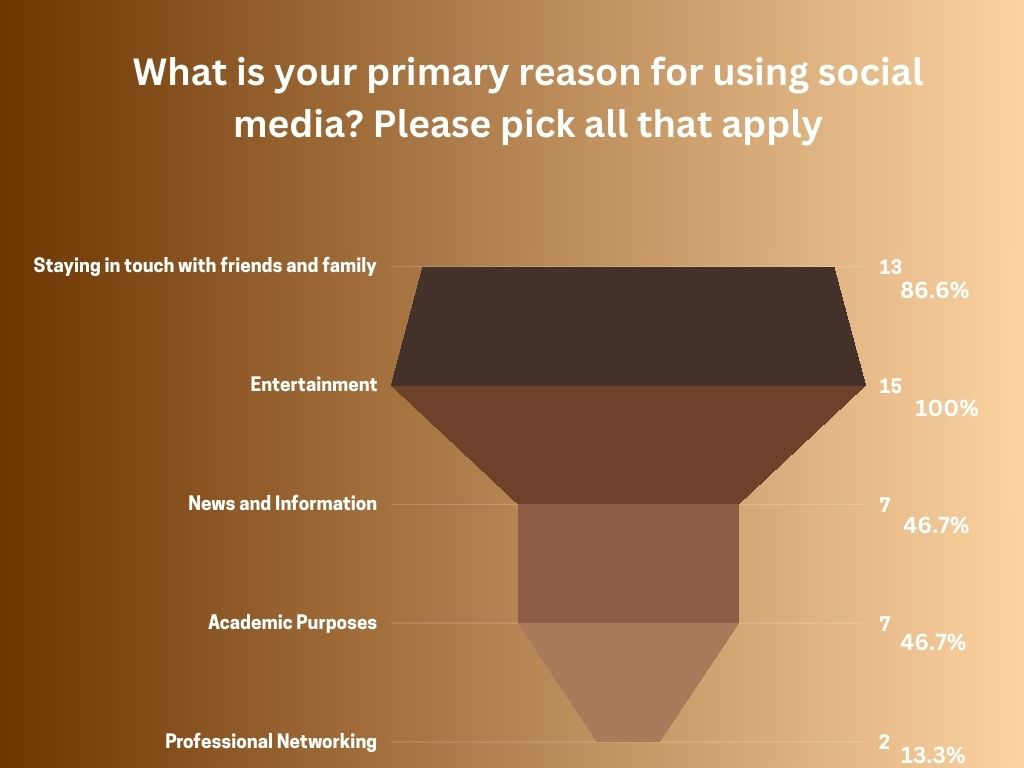
When asked why they use social media, the majority cited entertainment (100%) and staying in touch with friends and family (86.7%). Academic purposes and getting news and information were both at 46.7%, while professional networking was at 13.3%. The dominance of entertainment as a reason highlights social media’s role as a major distraction, potentially pulling focus away from academic tasks.
Relying on uses and gratifications literature, this usage theme is
defined as using social media to communicate and interact with
others. The title of this theme comes from Ko et al.’s (2005) research on social interaction motivation and website duration. Their
scale items included “meet people with my interests” and “keep up with what is going on”.
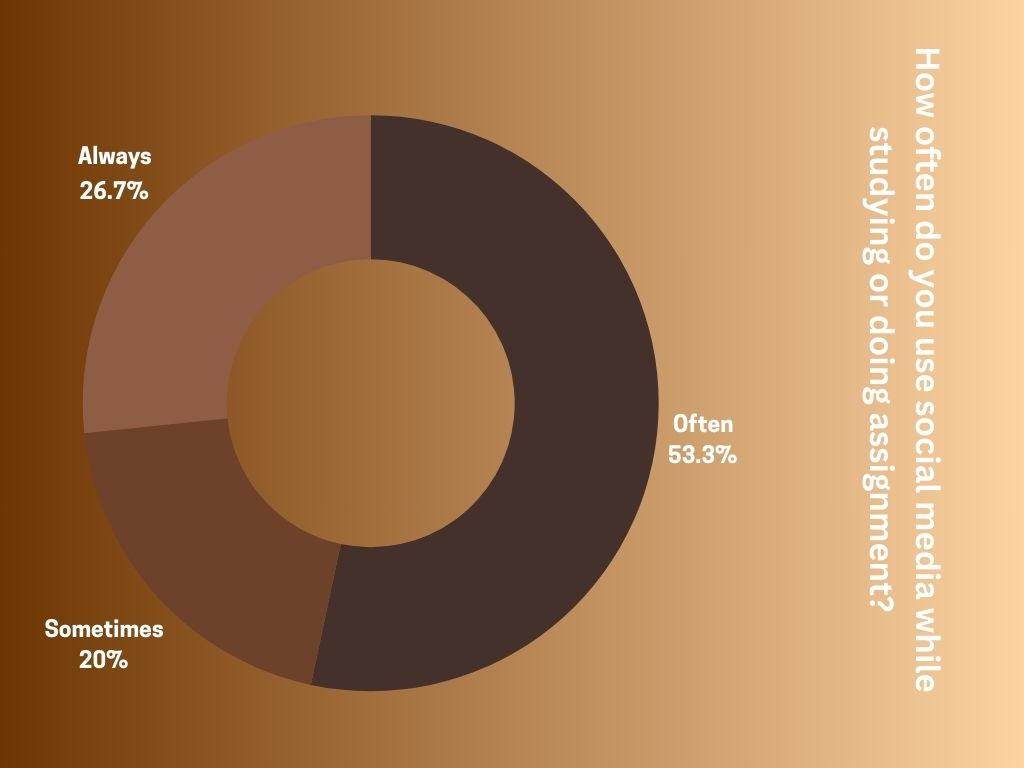
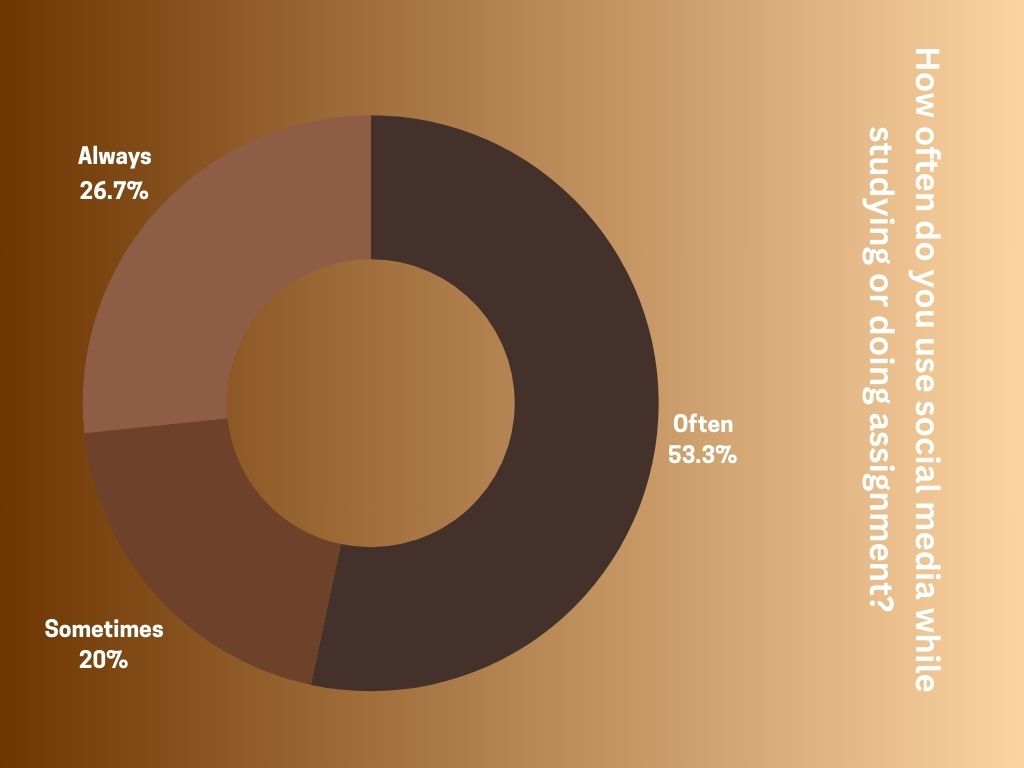
The survey data shows that social media use during study or homework is common: 26.7% always, 53.3% often, and 20% sometimes use it while studying. None of the respondents reported ‘rarely’ or ‘never’ using social media during these times.
Many academics, including Choney, S. (2010), San Miguel (2009), and Enriquez (2010), conducted studies on students’ usage of social networking sites and found that it had a detrimental impact on their academic performance.
Social Media and Academic Performance
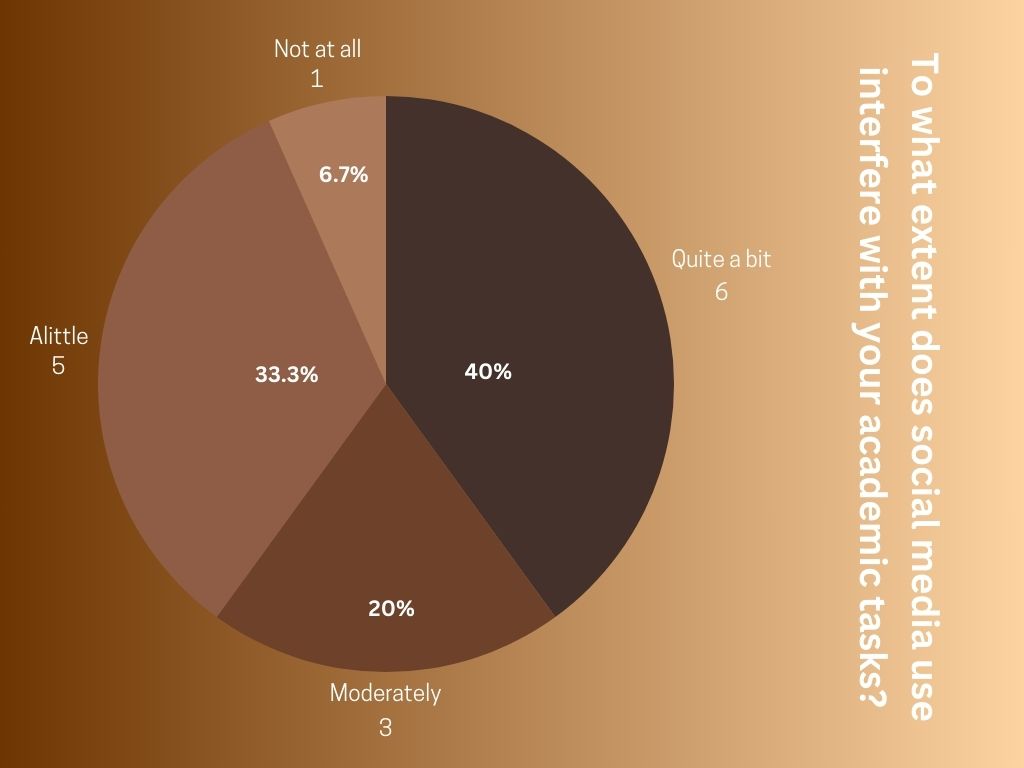
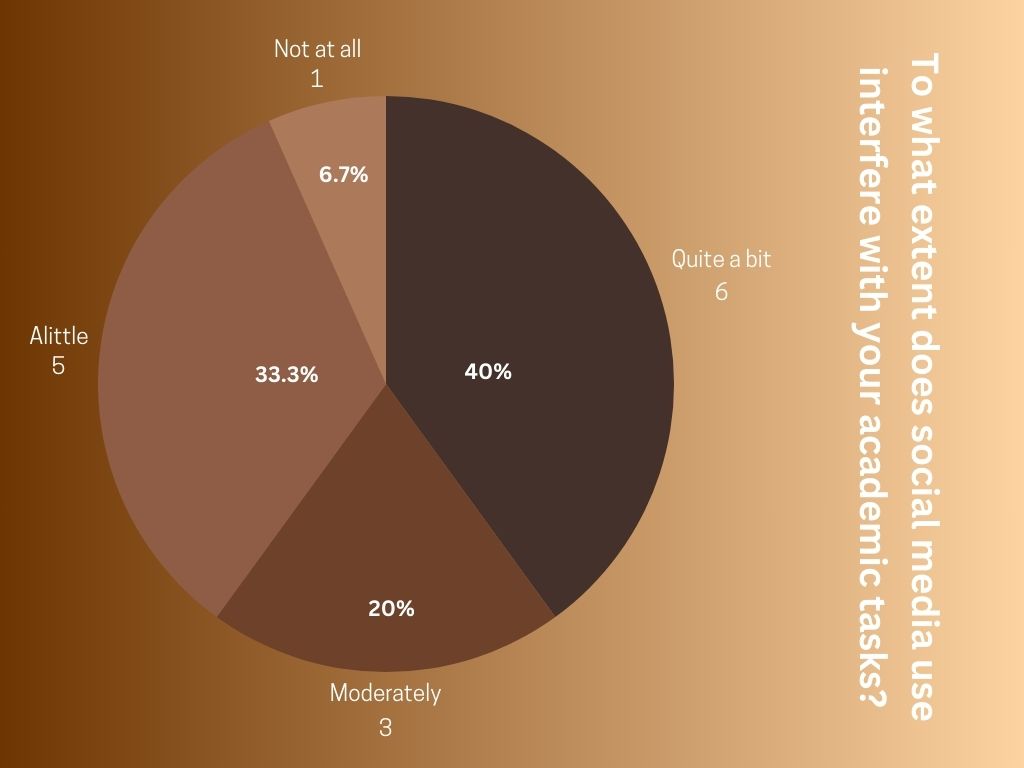
This frequent engagement can interfere with academic performance. About 40% of respondents said using social media interferes “quite a bit,” 20% “moderately,” 33.3% “a little,” and only 6.7% said “not at all.”
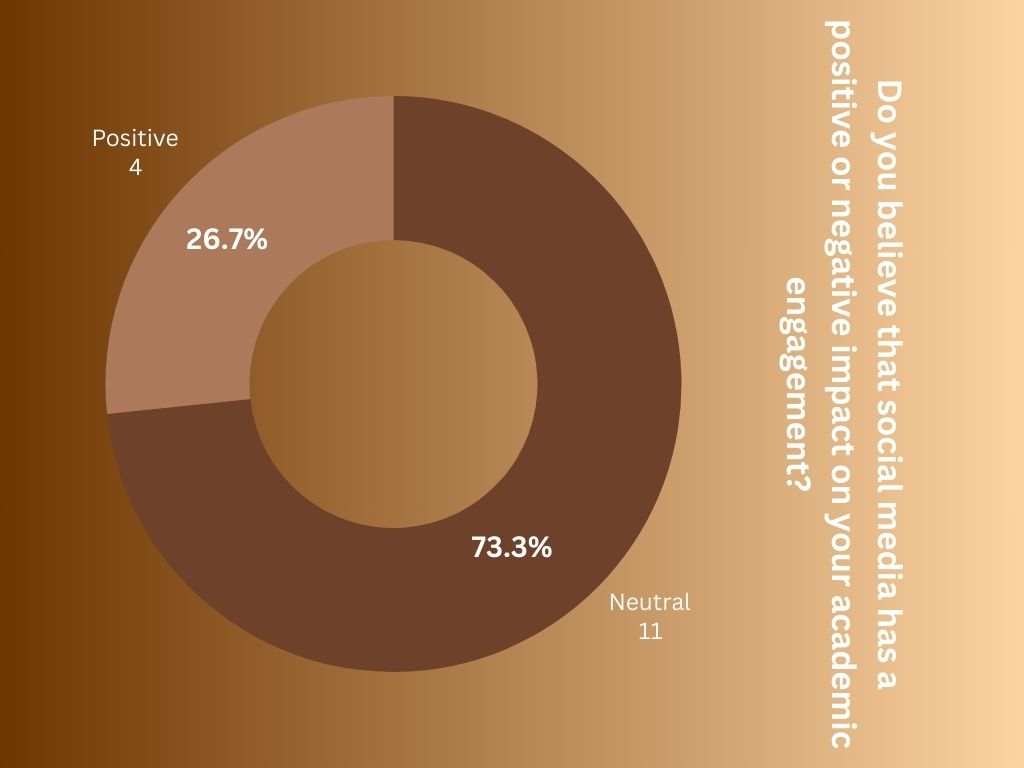
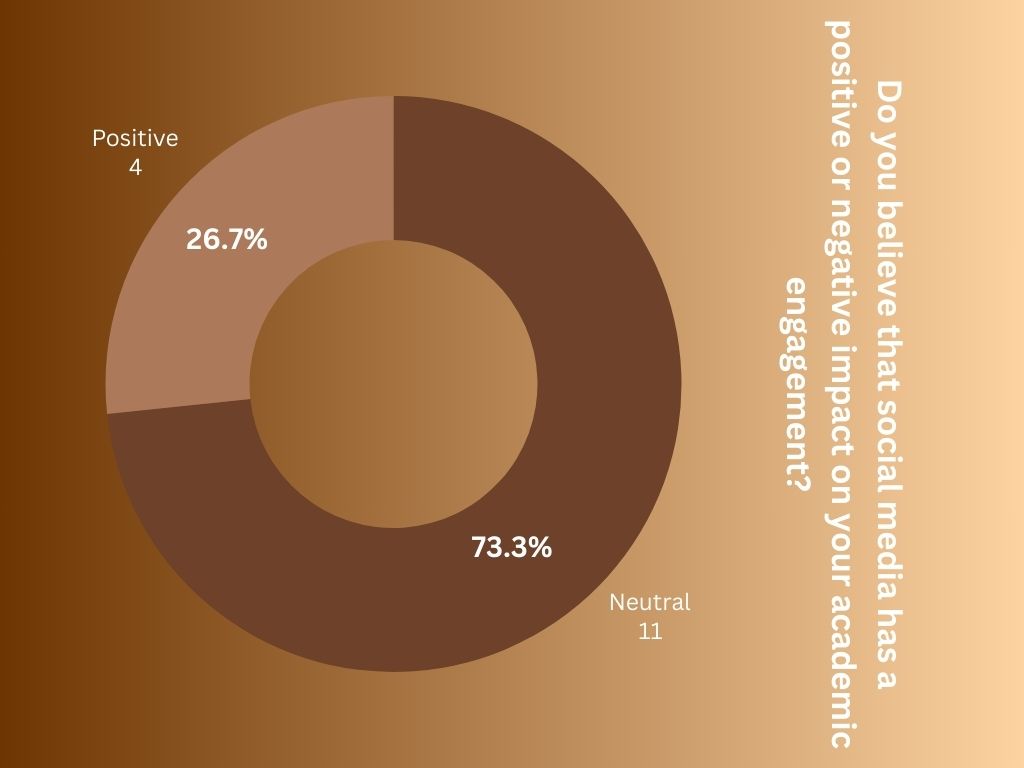
Regarding the impact of social media on academic engagement, 73.3% felt neutral, while 26.7% saw a positive impact.
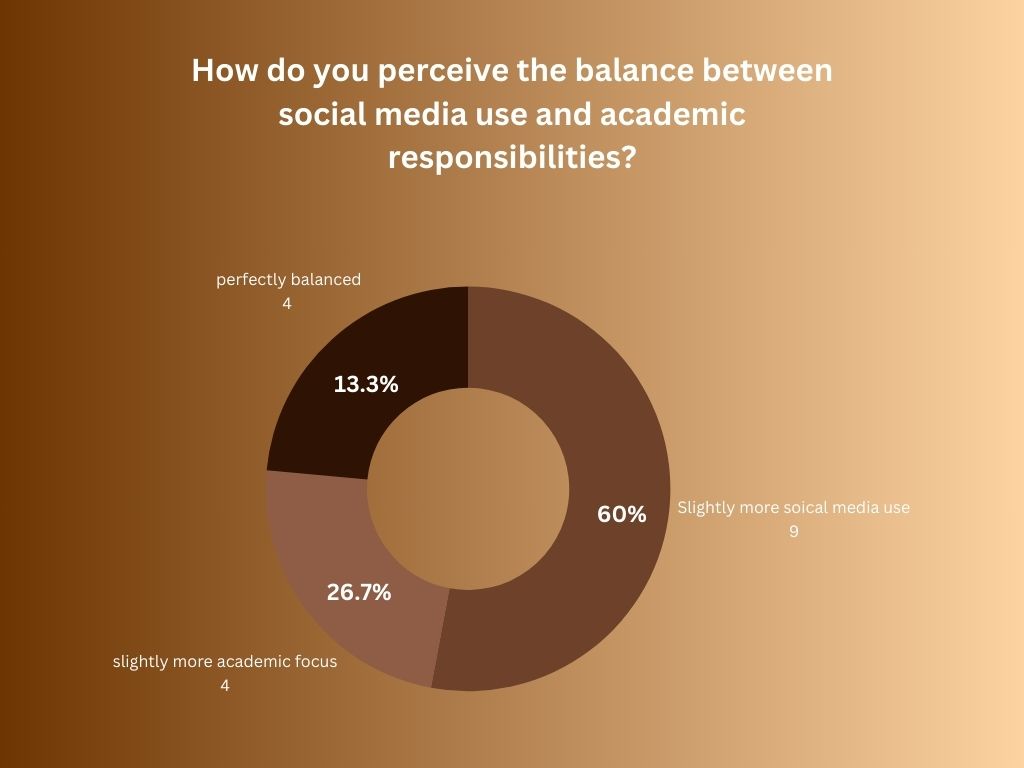
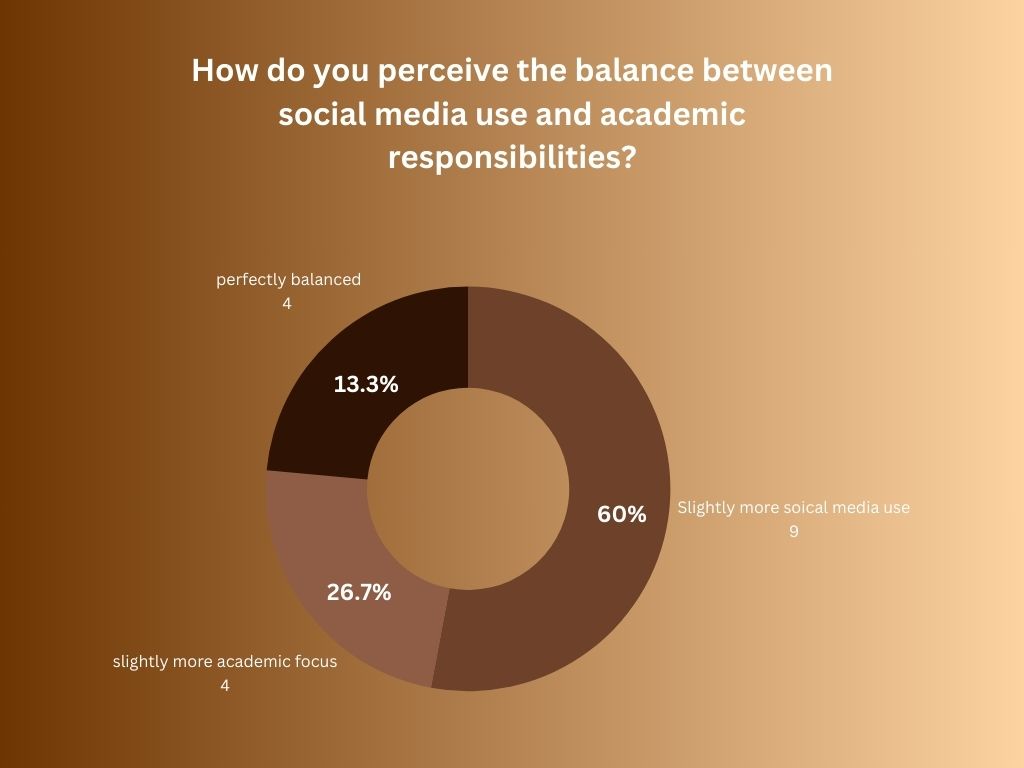
Balancing social media use with academic responsibilities remains a challenge. The survey revealed that 60% of respondents leaned slightly more toward social media use, 26.7% focused more on academics, and 13.3% felt perfectly balanced. This tilt towards social media highlights a potential area for improvement in time management and prioritization.
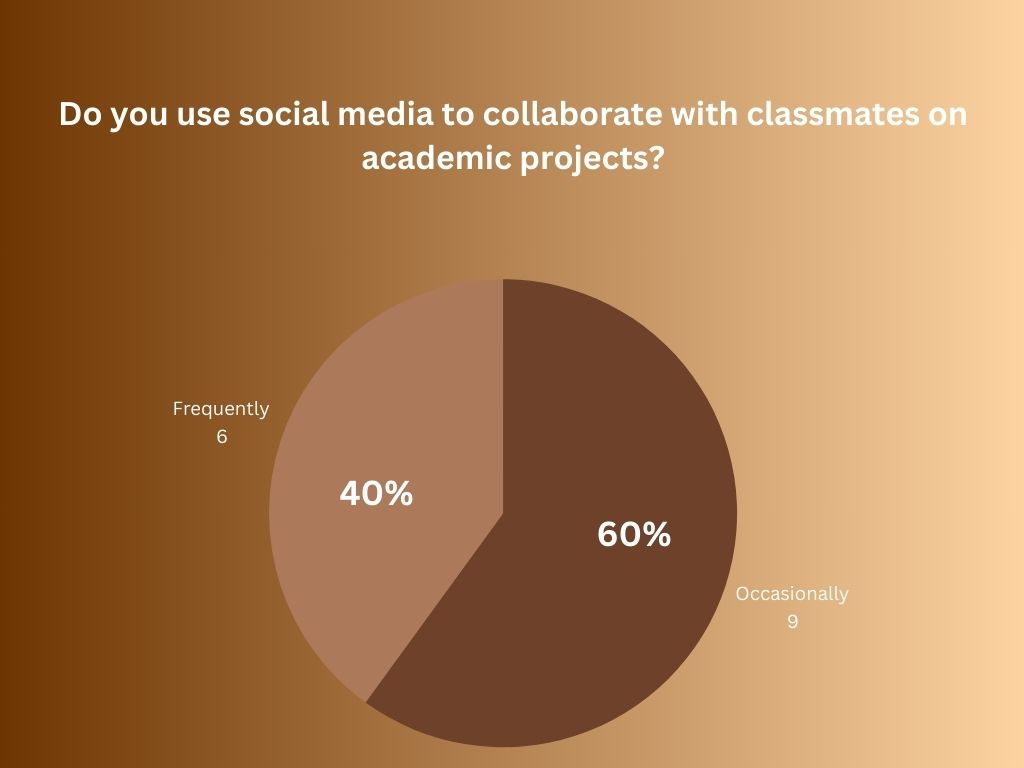
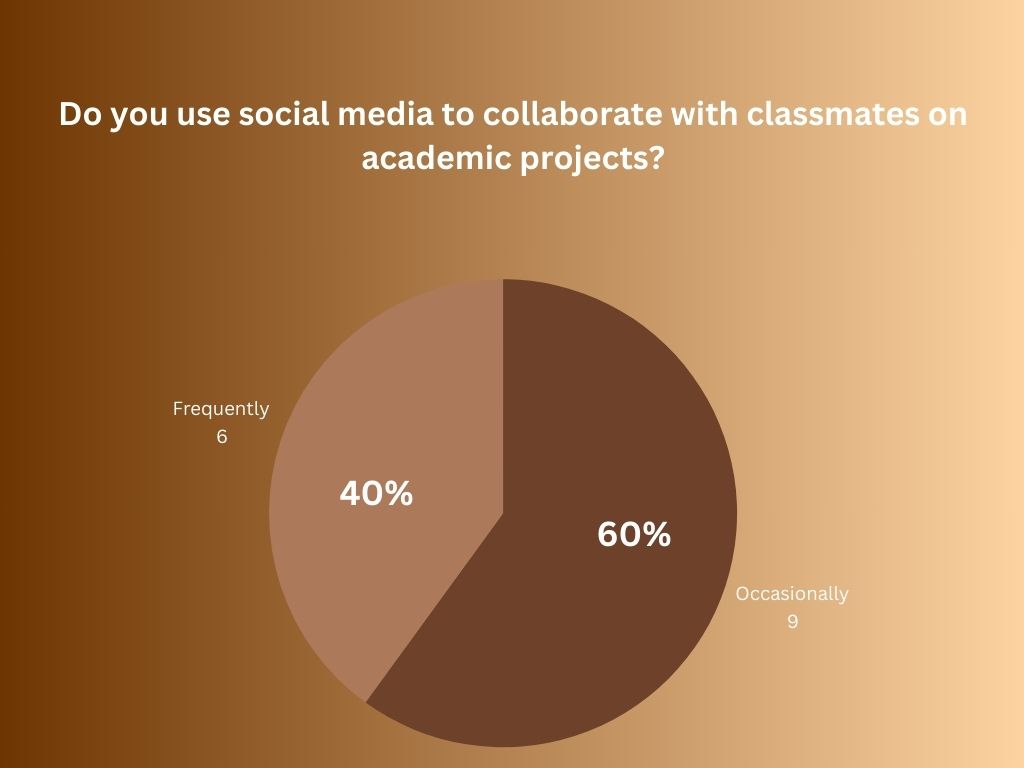
Social media also serves as a useful tool for academic collaboration, with 60% of respondents using it occasionally and 40% frequently to collaborate with classmates on academic projects. This demonstrates a positive aspect of social media, facilitating teamwork and communication.
Goodluck, E (2018) submitted that effective use of time will enable students get higher marks throughout the school year as well as on quizzes, tests and examinations. Goodluck, E. (2018) observed that the best students are not necessarily those who are smarter, but those who use their time well.
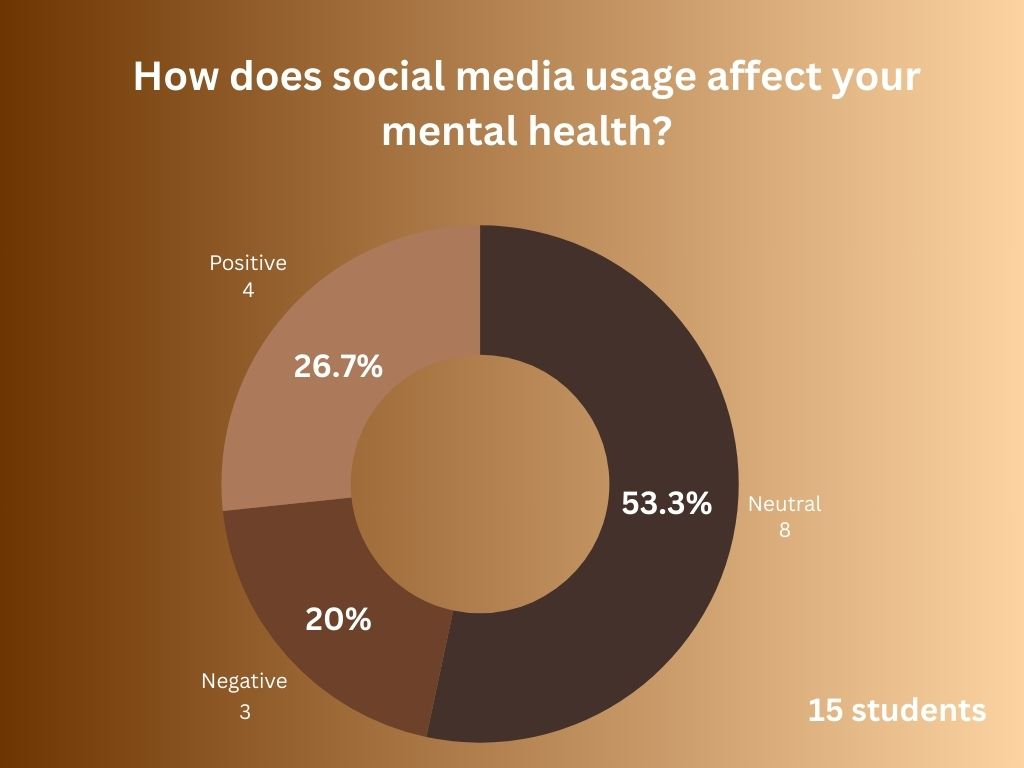
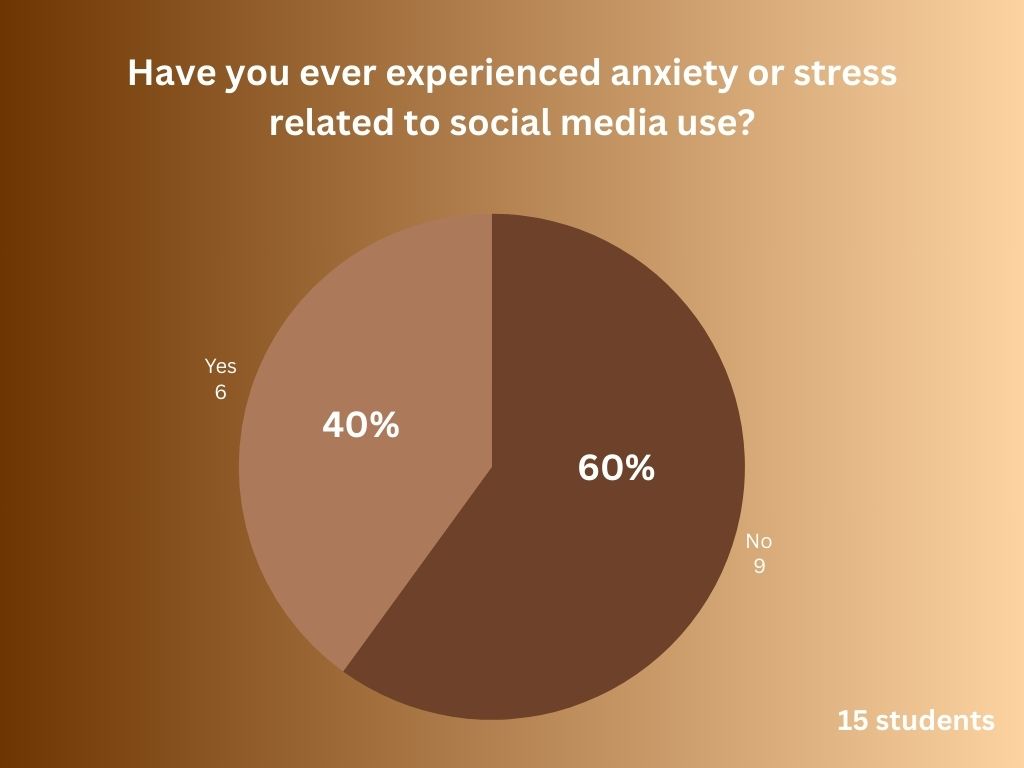
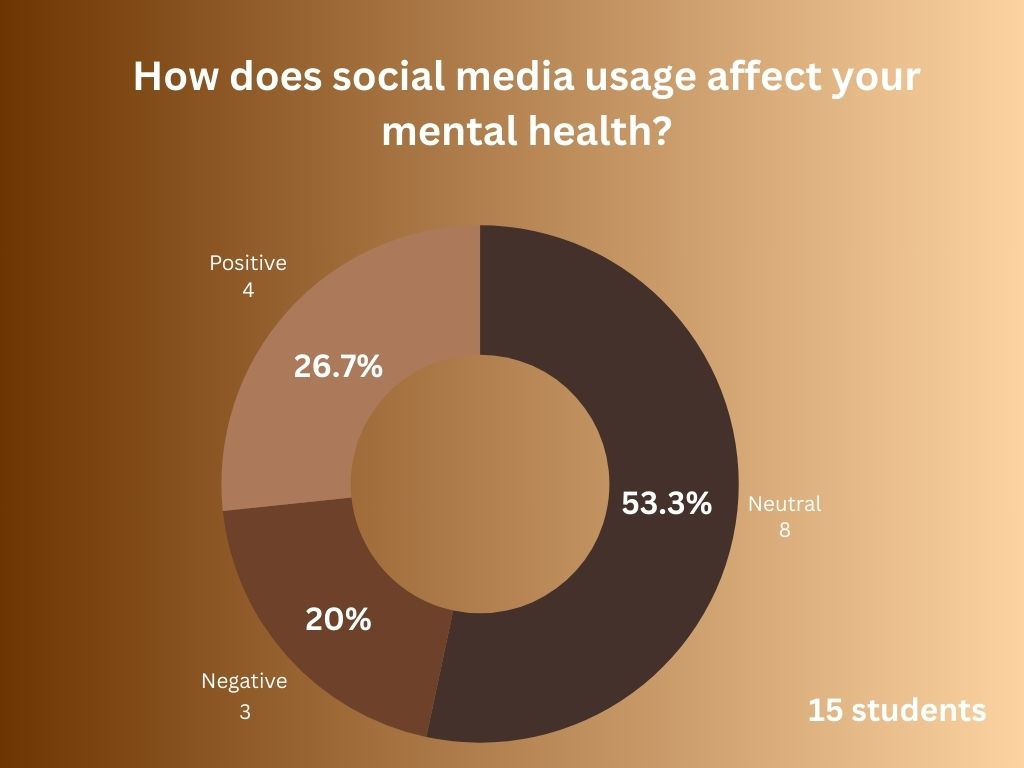
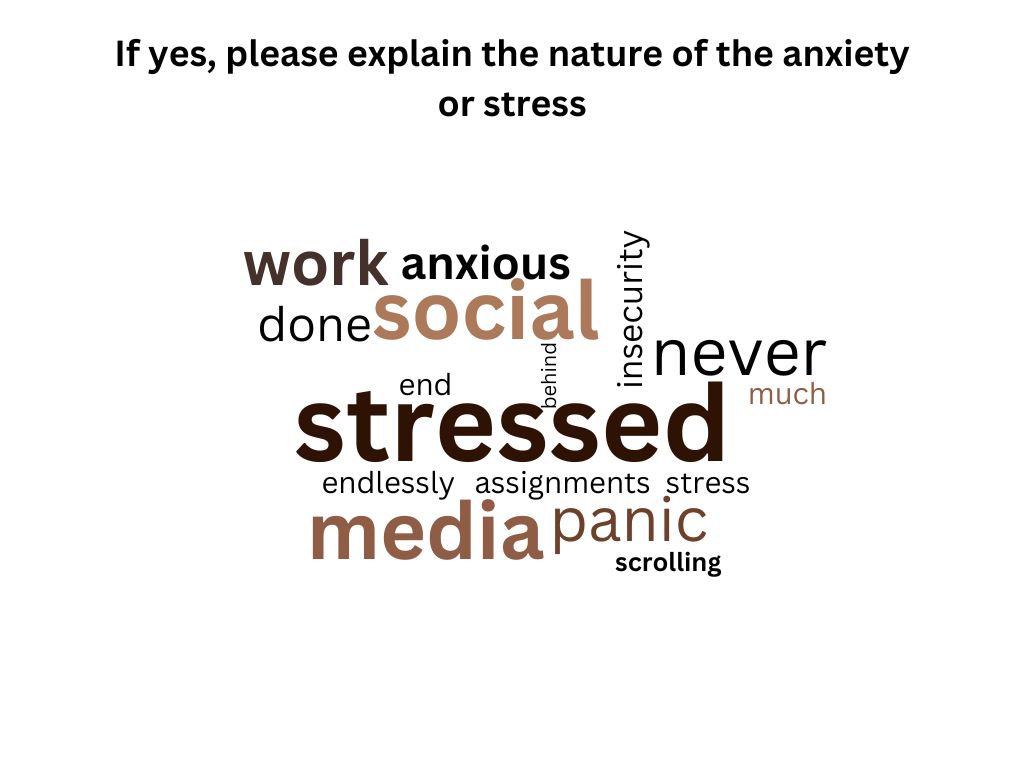
However, regarding mental health, the impact of social media is mixed. The survey showed that 53.3% felt neutral, 20% reported negative effects, and 26.7% noted positive effects. Additionally, 40% of students experienced anxiety or stress related to social media use, with reasons including feeling behind on assignments, endless scrolling, insecurity, and panic about incomplete work. Although much of the narrative on social media implies an adverse effect on mental health, more recent research findings have been mixed. For instance, a review indicated that some uses of social media, such as suicide preventionRobinson J, Bailey E, Hetrick S, Paix S, O’Donnell M, Cox G, Ftanou M, Skehan J(.2017). And authentic self-presentation, are associated with mental well-being in adolescents. Best P, Manktelow R, Taylor B.(2014).
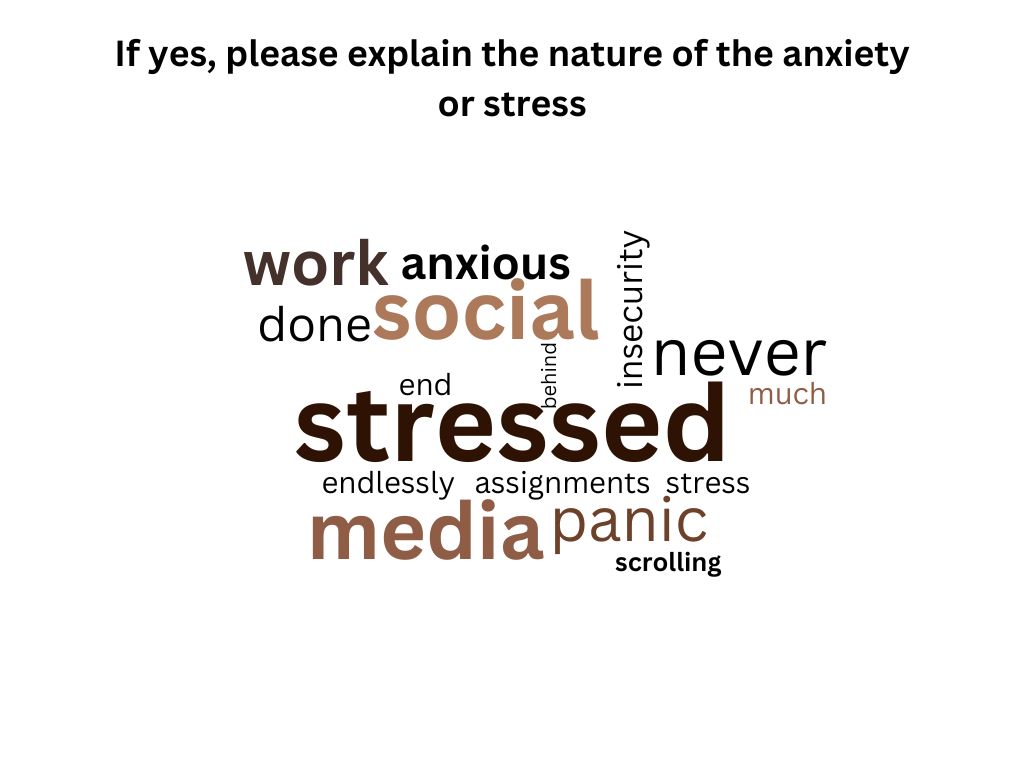
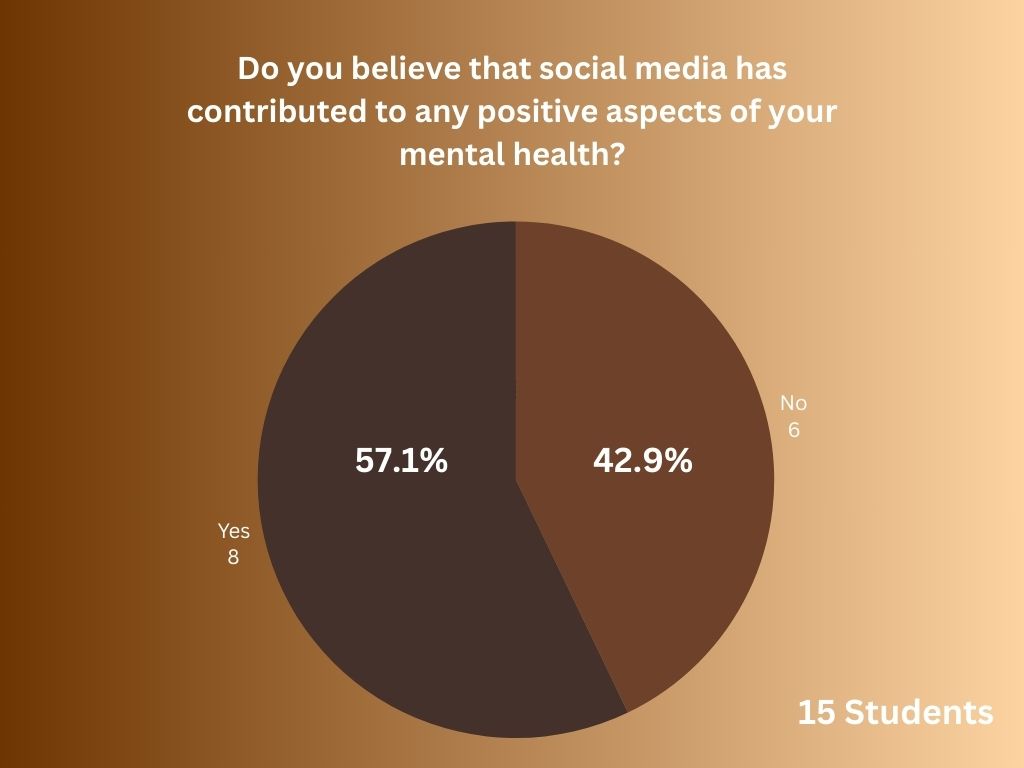
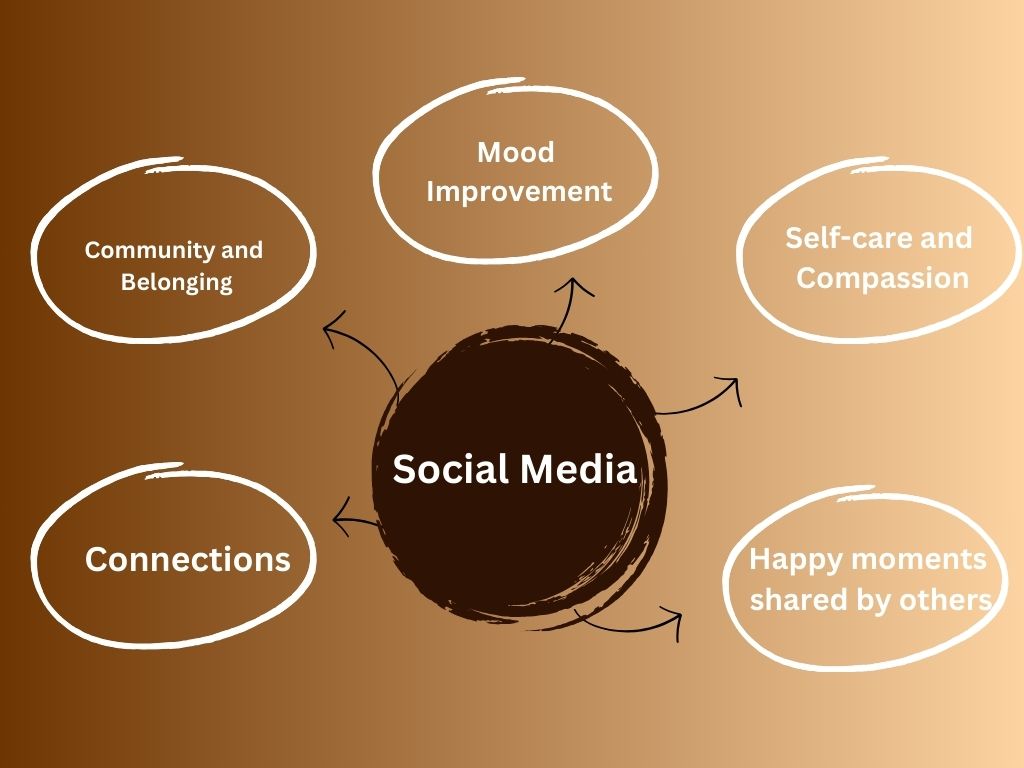
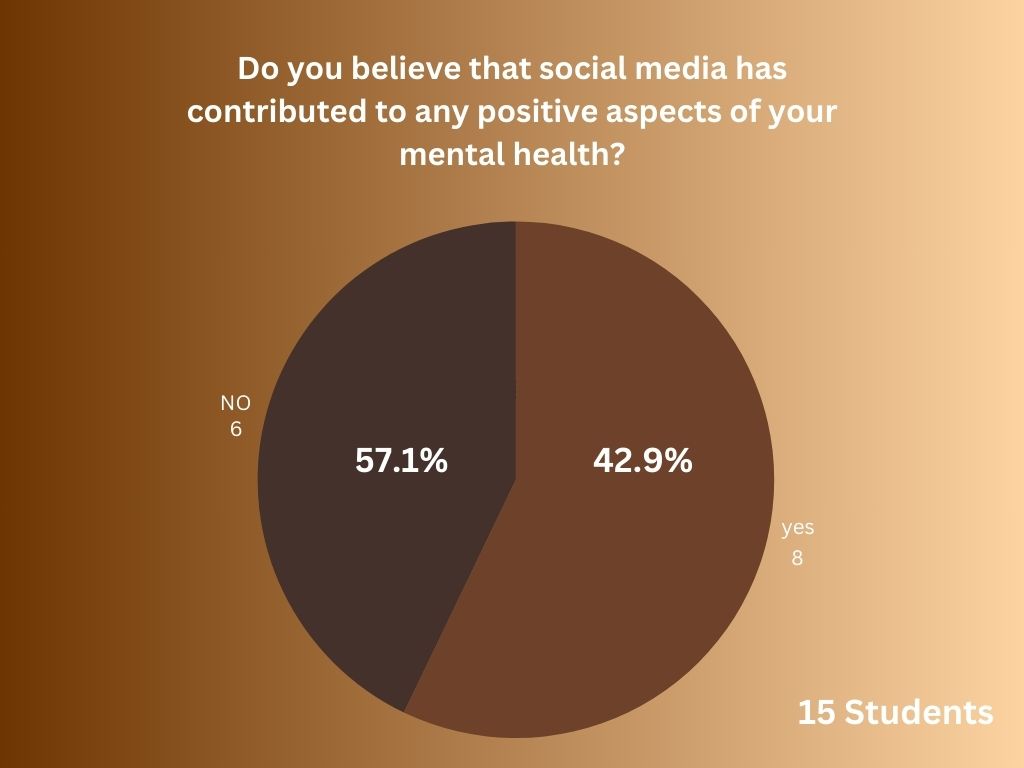
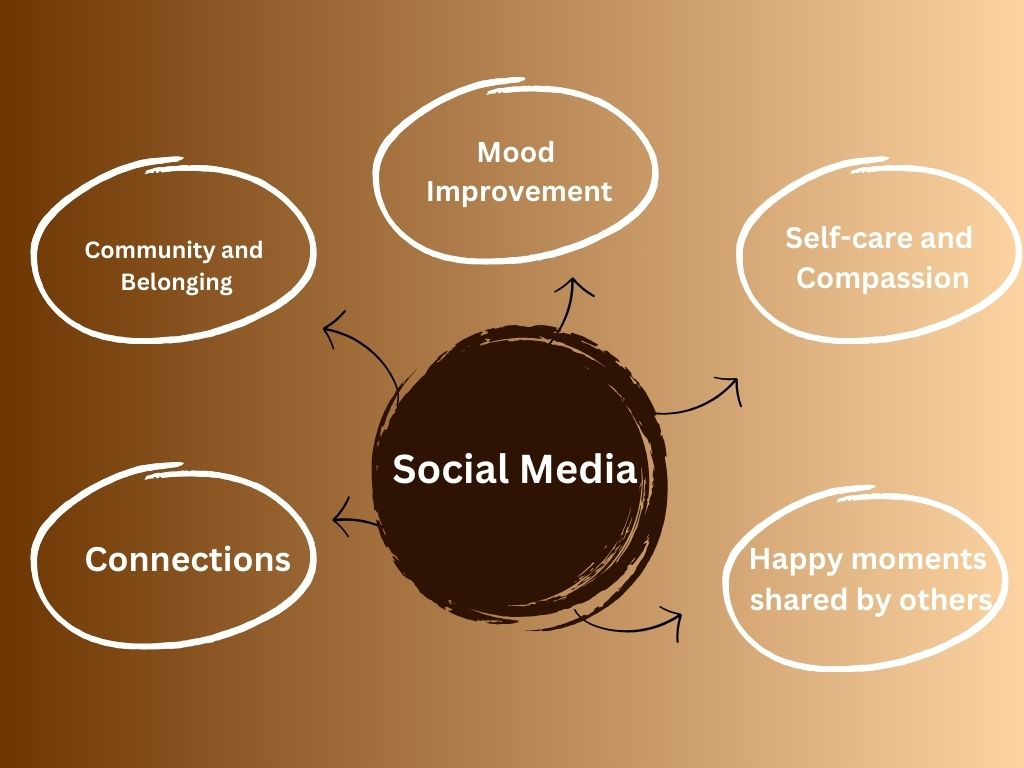
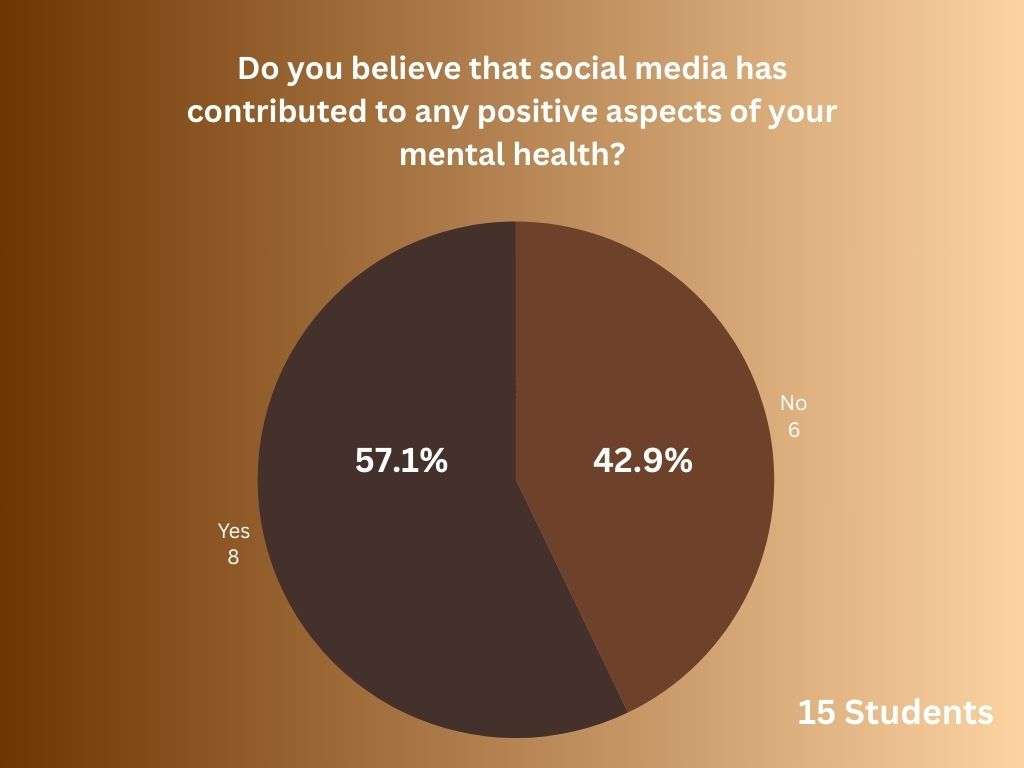
Yet, 57.1% believe social media contributed positively to their mental health, citing benefits such as connecting with friends, exposure to new ideas, and uplifting content.
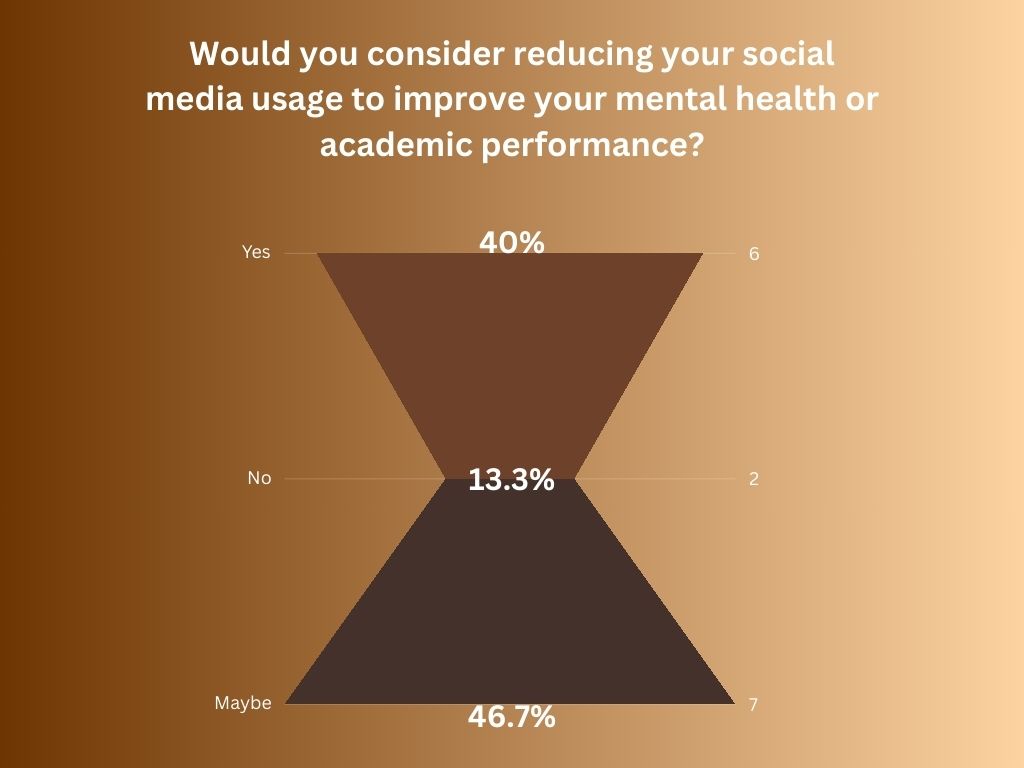
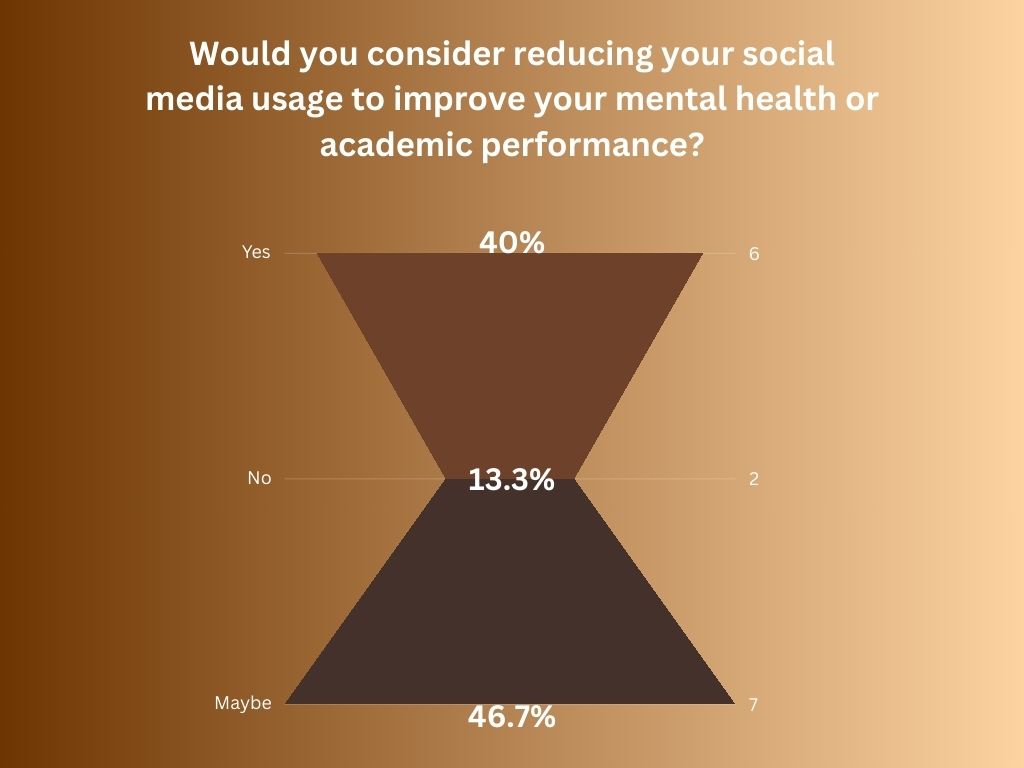
When asked about reducing social media usage to improve mental health or academic performance – 40% said yes, 13.3% said no, and 46.7% were unsure. This reflects a recognition of the potential benefits of cutting down on social media, but also uncertainty about how to implement such changes.
The survey results paint a detailed picture of social media’s impact on students’ academic performance and mental health. While social media offers benefits like staying connected, academic collaboration, and access to information, it also presents challenges such as distraction, stress, and anxiety. A number of studies have been conducted on the impact of social media and it has been indicated that the prolonged use of social media platforms such as Facebook may be related to negative signs and symptoms of depression,anxiety, and stress (Coybe SM, Roqers AA, Zurcher JD, Stock dalel, Booth M .(2020)). Furthermore, social media can create a lot of pressure to create the stereotype that others want to see and also being as popular as others
To address these issues, students can adopt strategies to manage their social media use more effectively. For example, setting specific time for social media breaks, using productivity apps to limit usage, and balancing online activities with offline ones. Additionally, educational institutions can provide workshops on digital wellness and time management to support students in navigating the digital landscape more effectively.
In conclusion, social media’s influence on academic performance and mental health is complex. By acknowledging both the positive and negative aspects and taking proactive steps to manage usage, students can reap benefits of social media while minimizing its drawbacks. This balanced approach can lead to improved academic outcomes and overall well-being, ensuring that social media remains a tool for connection and learning rather than a source of distraction and stress.
Data Summary
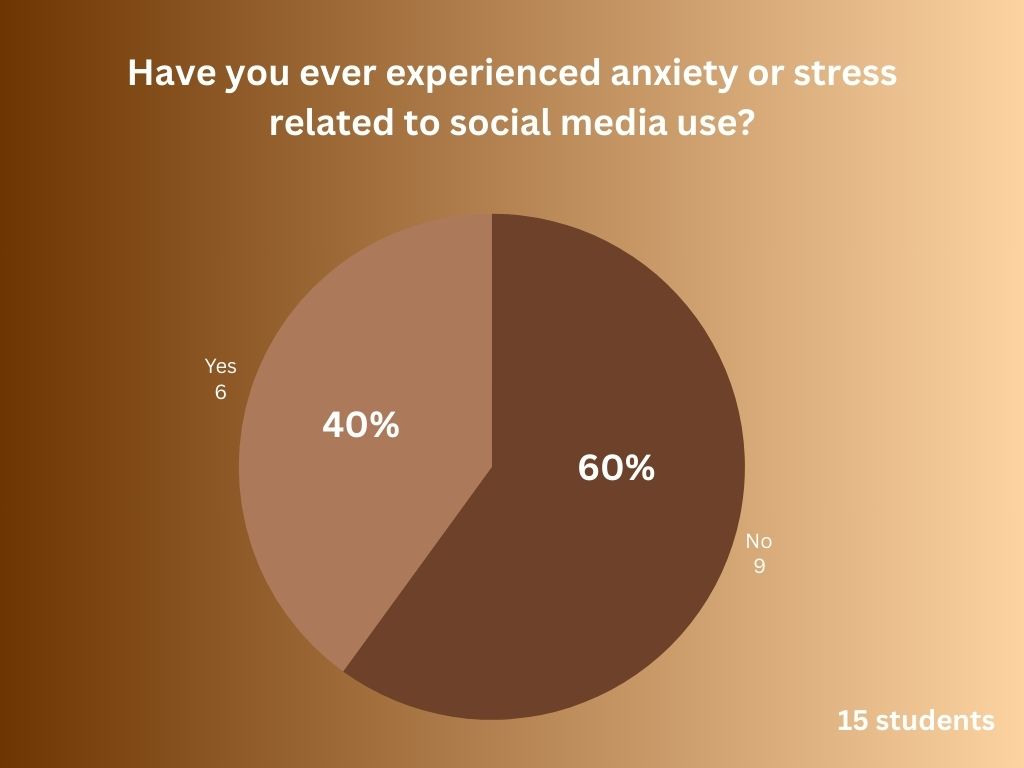
This summary presents data collected on the impact of social media usage on university students’ academic performance. The data was gathered through online surveys and interviews with BCM212 students. A total of 15 students participated, with 86.7% being female and 13.3% male.
Instagram is the most popular platform, used regularly by participants, followed by Snapchat and TikTok. In terms of daily usage, 20% of students use social media for 1-2 hours, 26.7% for 2-4 hours, another 26.7% for 4-6 hours, and 26.7% for more than 6 hours. The primary reason for social media use is entertainment, followed by staying in touch with friends and family, academic purposes, and news. Personal networking is the least common reason.
Regarding academic tasks, more than half of the students surveyed often use social media while working on assignments, 26.7% always, and 20% sometimes. Everybody stated that Social media interferes in various degrees with academic. When asked about the overall impact on academic performance, majority were neutral.
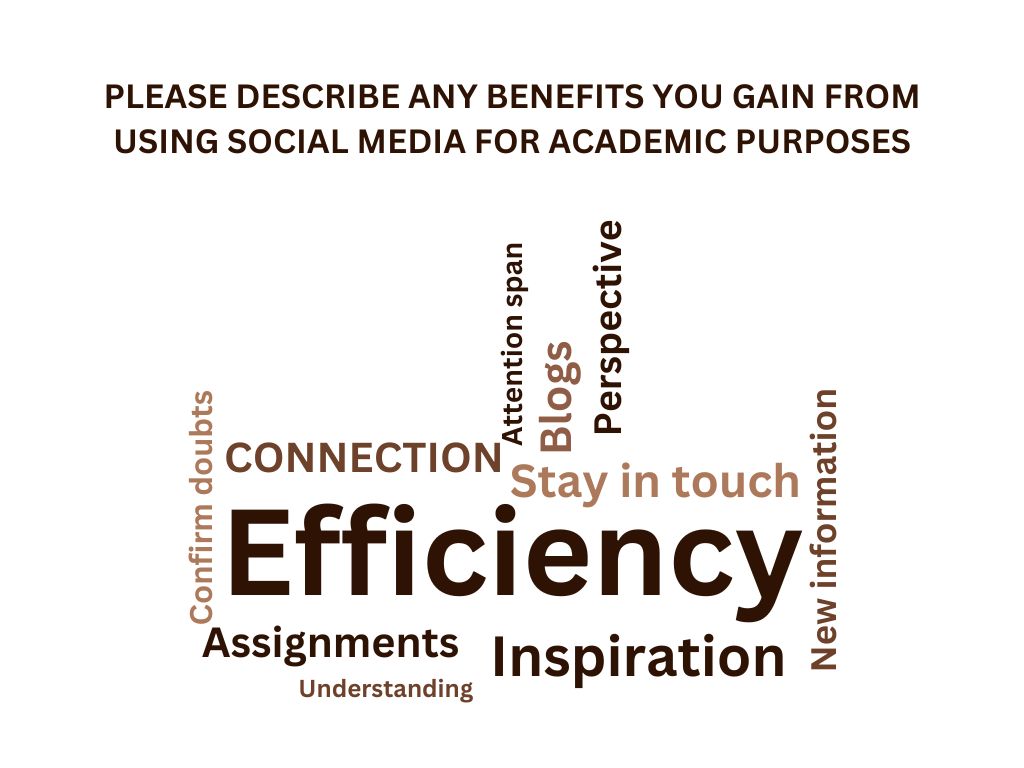
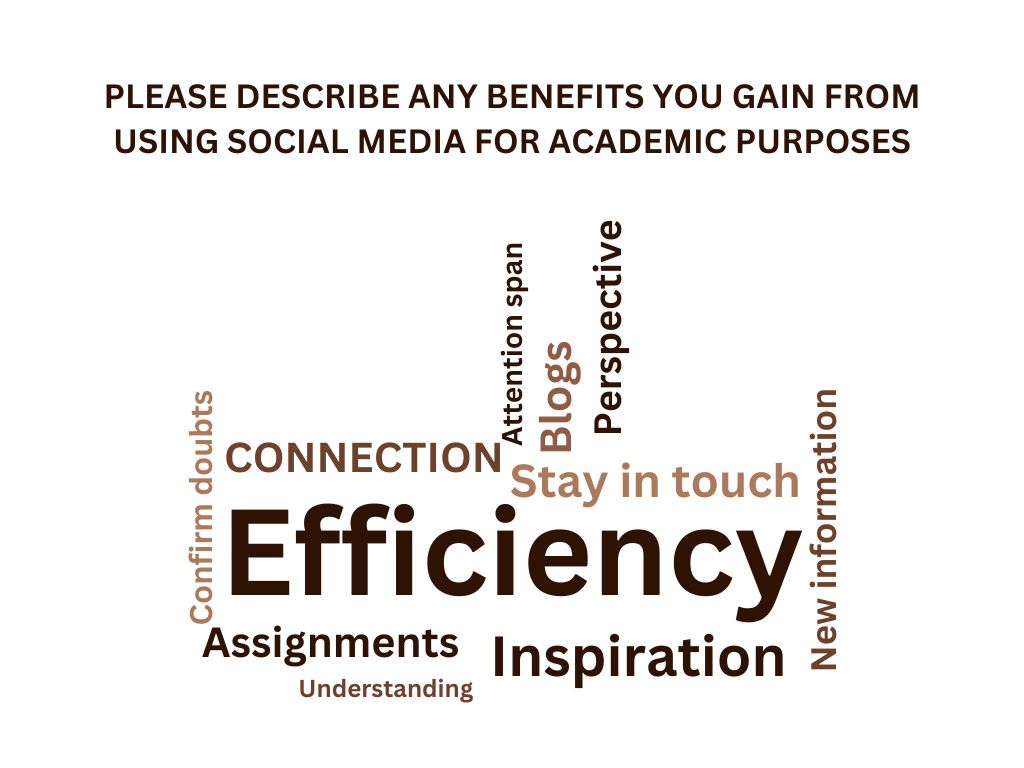
Qualitative data revealed that some students view social media as a reward after tasks, a study break, an aid in understanding topics, and a source of inspiration. Others noted it can cause distractions, procrastination, and focus issues due to notifications.
For academic success, majorioty participants stated that social media is important as compared to being very important. In balancing social media with academics. The percentage ratio between those who use sSocial media occasionally and frequently was 60:40.
Regarding mental health, 53.3% reported a neutral impact, 26.7% positive, and 20% negative. Positive mental health effects were noted as 57.1%, while 42.9% saw no benefits. To improve mental health and academic performance, 40% said they would reduce social media use, while 46.7% were unsure and only 13.3% stated that they will not reduce time spent on social media.
This data provides a comprehensive overview of the complex relationship between social media usage and academic performance, highlighting both benefits and challenges.
Bibliography
- Agarwal, M., Bishesh, B., Bansal, S. and Kumari, D., 2021. Role of social media on digital distraction: a study on university students. Journal of Content, Community & Communication, 13(7), pp.125-136.
- Al-Deen, H.S.N. and Hendricks, J.A. (2011). Social Media: Usage and Impact. [online] Google Books. Lexington Books. Available at: https://books.google.ae/books?hl=en&lr=&id=NLJX4hjVVUkC&oi=fnd&pg=PR7&dq=social+media+and+academic+performance+book&ots=hpmMllK1U6&sig=IhnVcDL7VwEamev1cdDSEinDB2k&redir_esc=y#v=onepage&q&f=false [Accessed 29 Jun. 2024].
- Boahene, K.O., Fang, J. and Sampong, F., 2019. Social media usage and tertiary students’ academic performance: Examining the influences of academic self-efficacy and innovation characteristics. Sustainability, 11(8), p.2431.
- Best, P., Manktelow, R. and Taylor, B. (2014). Online communication, Social Media and Adolescent wellbeing: a Systematic Narrative Review. Children and Youth Services Review, 41(41), pp.27–36.
- Burgess, J. (2017). The SAGE Handbook of Social Media. The SAGE Handbook of Social Media, [online] pp.1–662. Available at: https://www.torrossa.com/en/resources/an/5018793#page=602.
- Bartosik-Purgat M, (2017). Facebook use can lower grades by 20 percent, study says. [online] NBC News. Available at: http://www.msnbc.com/id/39038581/ns.technology_and_science-ech_and_gadgets/.Retrieved [Accessed 1 Jan. 2024].
- Berryman C, Ferguson C, Negy C: Social media use and mental health among young adults. Psychiatr Q.2018, 89:307-314. 10.1007/s11126-017-9535-6
- Choney, S. (2010). Facebook Use Can Lower Grades by 20 Percent, Study Says. http://www.msnbc.com/id/39038581/ns.technology_and_science-ech_and_gadgets/.Retrieved 14/08/13
- Coyne SM, Rogers AA, Zurcher JD, Stockdale L, Booth M: Does time spent using social media impact mental health?: An eight year longitudinal study. Comput Hum Behav. 2020, 104:106160.10.1016/j.chb.2019.106160.
- Deshmukh, A. (2023). Social Media Use Among Students Effects on Academic Performance. Ajita Deshmukh.
- Deepa, M. and Priya, V.K., 2020. Impact of social media on mental health of students. International Journal of Scientific & Technology Research, 9(03).
- Enriquez, J.G. (2010). Facebook and Other Online Social Networking Sites Can Lower Grades, Study Says. http://seerpress.com/facebook-and-other-online-social-networking-sites-can-lower-grades-studysays/6935/.Retrived 14/08/13
- Rithika, M. and Selvaraj, S., 2013. Impact of social media on students’ academic performance. International Journal of Logistics & Supply Chain Management Perspectives, 2(4), pp.636-640.
- Lau, W.W., 2017. Effects of social media usage and social media multitasking on the academic performance of university students. Computers in Human Behavior, 68, pp.286-291.
- Giunchiglia, F., Zeni, M., Gobbi, E., Bignotti, E. and Bison, I., 2018. Mobile social media usage and academic performance. Computers in Human Behavior, 82, pp.177-185.
- Moreton, L. and Greenfield, S., 2022. University students’ views on the impact of Instagram on mental wellbeing: a qualitative study. BMC Psychology, 10(1), p.45.
- Mensah, S.O. and Nizam, I., 2016. The impact of social media on students’ academic performance-A case of Malaysia Tertiary Institution. International Journal of Education, Learning and Training, 1(1), pp.14-21.
- Prevention Messages in Partnership With Young People: Exploratory Study. JMIR Mental Health, 4(4), p.e40. doi:https://doi.org/10.2196/mental.7847.
- Goodluck, E. (2018). 8 steps to effective time management for students. Retrieved fromhttp://www.goodluckexams.com/8-steps-to-effective-time-management-for-students/
- 12. Escobar-Viera C, Whitfield D, Wessel C, et al.: For better or for worse? A systematic review of the evidenceon social media use and depression among lesbian, gay, and bisexual minorities. JMIR Ment Health. 2018,5:10496.
- 13. Rahman NI, Ismail S, Seman TNAT, et al.: Stress among preclinical medical students of University SultanZainal Abidin. J Appl Pharm Sci. 2013, 3:76-81.
- 14. O’Reilly M, Dogra N, Hughes J, Reilly P, George R, Whiteman N: Potential of social media in promotingmental health in adolescents. Health Promot Int. 2018, 34:981-991.
- 15. O’Reilly M, Dogra N, Whiteman N, Hughes J, Eruyar S, Reilly P: Is social media bad for mental health and wellbeing? Exploring the perspectives of adolescents. Clin Child Psychol Psychiatry. 2018, 23:601-613.10.1177/1359104518775154
- Ko, H., Cho, C.H. and Roberts, M.S. (2005), “Internet uses and gratifications: a structural equation model of interactive advertising”, Journal of Advertising, Vol. 34 No. 2, pp. 57-70.
- Naslund, JA, Bondre, A, Torous, J & Aschbrenner, KA 2020, ‘Social Media and Mental Health: Benefits, Risks, and Opportunities for Research and Practice’, Journal of Technology in Behavioral Science, vol. 5, no. 3, pp. 245–257.
 making media