Research Summary
Choosing the Topic and Research Process
The power of images in storytelling has always fascinated me. With the rise of digital media, visuals shape narratives, influence public opinion, and contribute to social justice conversations. I chose this topic because I wanted to explore how storytelling through images can raise awareness, challenge biases, and create a more inclusive dialogue.
To conduct my research, I used academic sources, journal articles, and case studies on visual storytelling, media representation, and digital communication. I explored how images shape perceptions, how visual narratives influence emotions, and how marginalized communities use images for advocacy. Research from Messaris (1997) and Rose (2016) highlights that visual media is not just a reflection of reality but an active tool that constructs meaning. Understanding this was essential in curating images that align with my project.
Sourcing and Relevance of Images
To ensure ethical image use, I sourced five images licensed under Creative Commons from platforms like Unsplash and Pexels. These images were chosen based on their ability to evoke emotions and illustrate the themes of social justice, media influence, and digital storytelling. The remaining visuals were my own, adding a personal touch and reinforcing my perspective as a content creator.

Each image was selected with intention. For instance, one of the images captures a diverse group of students engaging with social media, representing the inclusivity of digital storytelling. Another image depicts a protest scene, emphasizing the role of visuals in activism. These choices align with my research on how social media platforms use imagery to amplify voices and drive movements (Castells, 2015).
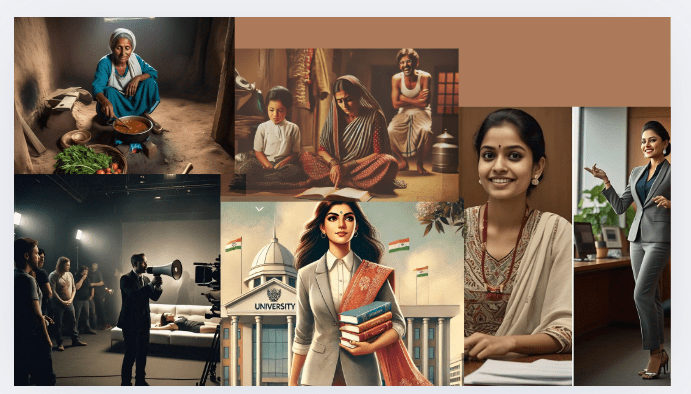
This images ware generated using Meta AI
Key Insights from Research
My research uncovered critical insights on how images influence narratives:
- Visuals Increase Engagement and Retention Studies show that people retain 80% of what they see compared to only 20% of what they read (Medina, 2008). This proves why images are essential in social justice movements and media communication.
- Images as Persuasion Tools Messaris (1997) argues that visuals shape opinions more effectively than text, as they bypass rational processing and trigger emotions. This is why marketing and advocacy campaigns heavily rely on striking imagery.
- Social Media and Image Virality Research by Bakhshi et al. (2014) found that social media posts containing images receive significantly higher engagement rates. This reinforces the role of visual storytelling in digital activism, where images can spark discussions and influence social change.
- The Ethics of Visual Storytelling While images can be powerful tools, they can also be manipulated to spread misinformation. Rose (2016) emphasizes that content creators must be mindful of how they frame narratives, ensuring authenticity and responsibility in digital storytelling
Innovative Solutions Ethical and Inclusive Visual Storytelling
Based on my findings, I propose the following solutions to enhance ethical and inclusive storytelling through visuals:
- Inclusive Representation Media and content creators should prioritize diverse representation to challenge stereotypes and provide authentic narratives.
- Fact-Checking and Ethical Sourcing Using licensed images and giving proper credit ensures transparency and prevents misinformation.
- Audience Engagement through Visuals Incorporating interactive elements like infographics, short-form videos, and user-generated content can enhance storytelling impact.
- Educational Initiatives Institutions should integrate visual literacy in media courses, teaching students how to critically analyze and create ethical visual content.
These solutions align with the principles of social justice by ensuring media representation is fair, accurate, and responsible.
Personal Reflection
This project deepened my understanding of how images shape stories, influence emotions, and contribute to social justice. I learned that a well-chosen image is more than just an aesthetic element it’s a powerful narrative tool that can inspire change.
As a content creator, I often use visuals to connect with my audience, but this project made me more aware of the ethical responsibilities that come with it. It reminded me that every image carries meaning, and as creators, we must be intentional about what we share. Whether it’s advocating for inclusivity, challenging biases, or simply telling an honest story, visual storytelling has a profound impact on how audiences perceive the world.
Moreover, I realized how personal storytelling through images aligns with my values. I believe in authenticity and relatability, and this project reinforced the idea that visuals should not just be engaging but also meaningful. Moving forward, I plan to apply these insights to my content, ensuring that my visuals not only captivate but also contribute to positive narratives.
This experience also highlighted the importance of media literacy. In a world where misinformation spreads rapidly, being able to critically analyze and ethically create images is crucial. I now see visual storytelling as a responsibility one that can shape perspectives, inform audiences, and, ultimately, drive social change.
References
Bakhshi, S., Shamma, D. A., & Gilbert, E. (2014). Faces engage us: Photos with faces attract more likes and comments on Instagram. Proceedings of the SIGCHI Conference on Human Factors in Computing Systems, 965-974.
Castells, M. (2015). Networks of outrage and hope: Social movements in the Internet age. Polity Press.
Medina, J. (2008). Brain Rules: 12 Principles for Surviving and Thriving at Work, Home, and School. Pear Press. Messaris, P. (1997). Visual Persuasion: The Role of Images in Advertising. SAGE Publications.
Rose, G. (2016). Visual Methodologies: An Introduction to Researching with Visual Materials. SAGE Publications
Vaishali Vijaykumar (2021). Kadhais of kitchen culture. [online] The New Indian Express. Available at: https://www.newindianexpress.com/cities/chennai/2021/Sep/07/kadhaisof-kitchen-culture-2355179.html [Accessed 20 Mar. 2025].
Freepik. (2024). A young girl looking out of a barred window Perfect for illustrating themes of confinement curiosity or longing | Premium AI-generated image. [online] Available at: https://www.freepik.com/premium-ai-image/young-girl-looking-out-barred-window-perfect-illustrating-themes-confinement-curiosity-longing_203356343.htm [Accessed 20 Mar. 2025].
Photography. (2018). India’s Forgotten Child Brides. [online] Available at: https://www.nationalgeographic.com/photography/article/child-brides-marriage-shravasti-india-culture.
Freepik. (2024). A young girl looking out of a barred window Perfect for illustrating themes of confinement curiosity or longing | Premium AI-generated image. [online] Available at: https://www.freepik.com/premium-ai-image/young-girl-looking-out-barred-window-perfect-illustrating-themes-confinement-curiosity-longing_203356343.htm [Accessed 20 Mar. 2025].
Alamy Limited (2025). India locks hi-res stock photography and images – Alamy. [online] Alamy. Available at: https://www.alamy.com/stock-photo/india-locks.html?sortBy=relevant [Accessed 21 Mar. 2025].
D’Zurilla, C. (2023). Priyanka Chopra Jonas finally paid the same as male co-star. [online] Los Angeles Times. Available at: https://www.latimes.com/entertainment-arts/tv/story/2023-03-10/priyanka-chopra-pay-parity-citadel-richard-madden [Accessed 21 Mar. 2025].
Bhatia, S. (2019). Bollywood celebrities before and after alleged plastic surgery. [online] Gulf News: Latest UAE news, Dubai news, Business, travel news, Dubai Gold rate, prayer time, cinema. Available at: https://gulfnews.com/photos/entertainment-photos/bollywood-celebrities-before-and-after-alleged-plastic-surgery-1.1577353796300 [Accessed 21 Mar. 2025].
Anoo Bhuyan, I. com & S.K. (n.d.). Eight years on, India’s law to prevent workplace sexual harassment is marred by poor data collection. [online] Scroll.in. Available at: https://scroll.in/article/987583/eight-years-on-indias-law-to-prevent-workplace-sexual-harassment-is-marred-by-poor-data-collection.
 making media