Assessment 2 Part 2
Table of contents
| Introduction |
| Concept and World Building |
| Narrative Development Across Episodes |
| Thematic Ideas |
| Team Process and Collaboration |
| Reflection and Learning Outcomes |
| What We Would Improve in Future Episodes |
| Conclusion |
| Refrences |
Introduction
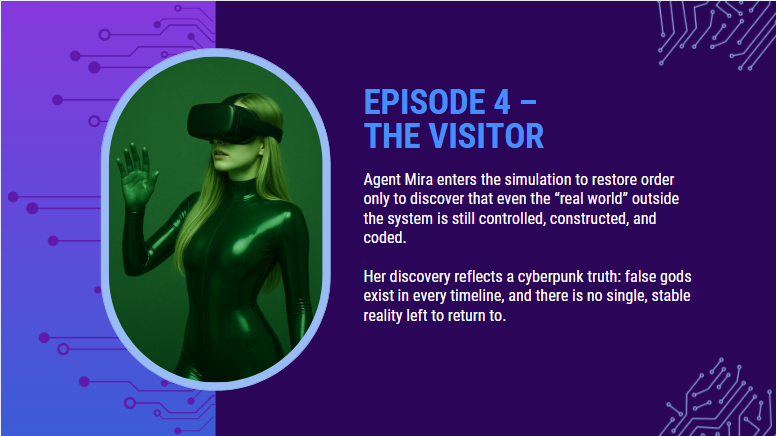
Our dystopian podcast series The Eden Project explores a world where memory, identity, and control are manipulated through technology. Across four connected audio episodes, we take listeners inside a simulation built by an authoritarian system to “protect” humanity after societal collapse. The story follows numbered citizens Two (Batool), Three (Kareem), and Five (Shaeema) as they begin to question their looping lives, their emotions, and eventually the nature of their entire existence. By Episode 4, a government officer named Agent Mira (Sakina) enters the simulation to contain the rebellion only to discover that she herself is part of the same illusion.
Through sound design, voice acting, and layered storytelling, our group wanted to create an immersive experience that felt cinematic even without visuals. Each episode became a reflection on modern surveillance, the loss of individuality, and the question that drives most dystopian fiction
how much control is too much?

Image generated by ChatGPT.
Concept and World Building

Image generated by ChatGPT.
The idea for The Eden Project emerged from our shared fascination with how technology can simultaneously preserve and erase human identity. We imagined a world that appears calm and perfect on the surface, yet hides a mechanical heartbeat beneath a metaphor for how digital spaces curate our lives while quietly shaping our emotions. Our concept was also inspired by dystopian narratives such as The Maze Runner, The Institute, and The Hunger Games, which all explore segregation, controlled environments, and survival through obedience.
Within this world, the “Recovery Centre” functions as a digital sanctuary where citizens believe they are being protected from external chaos. Their days repeat in cycles, “wellness pills” suppress memory, and the omnipresent governmental voice CONTROL monitors every thought. This directly reflects Michel Foucault’s idea of biopower, where institutions regulate populations through health, care, and routine. The structure of Eden also mirrors the Panopticon, Jeremy Bentham’s circular surveillance design later expanded by Foucault, where individuals behave as though they are always being watched.
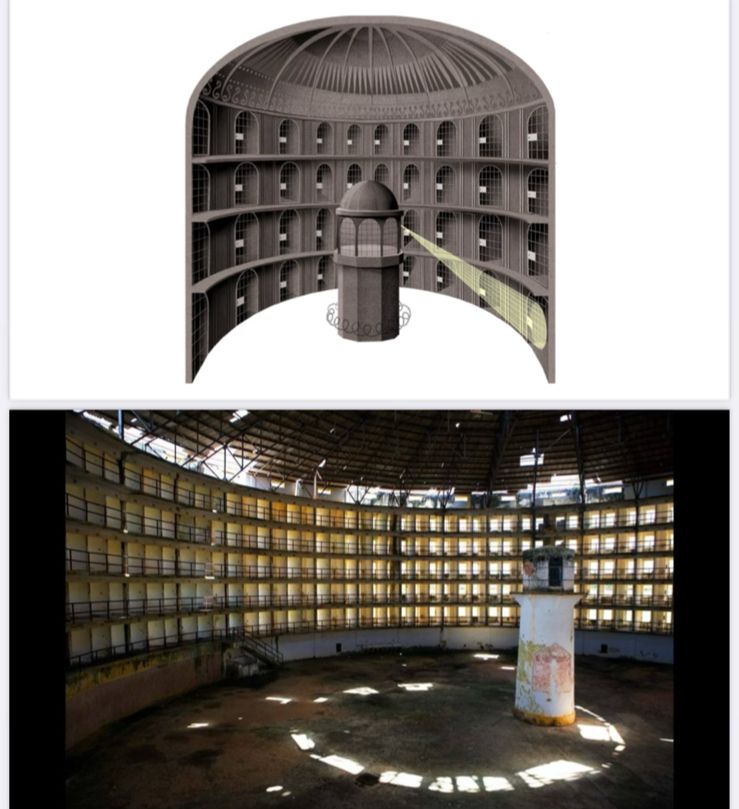
Our soundscape reinforces this atmosphere through glitch effects that represent memory breaks, soft mechanical hums that hint at surveillance, and strategic silences that signal resistance. In doing so, the podcast adopts Jean Baudrillard’s concept of simulation, where artificial systems become so dominant that they replace reality entirely.
Narrative Development Across Episodes
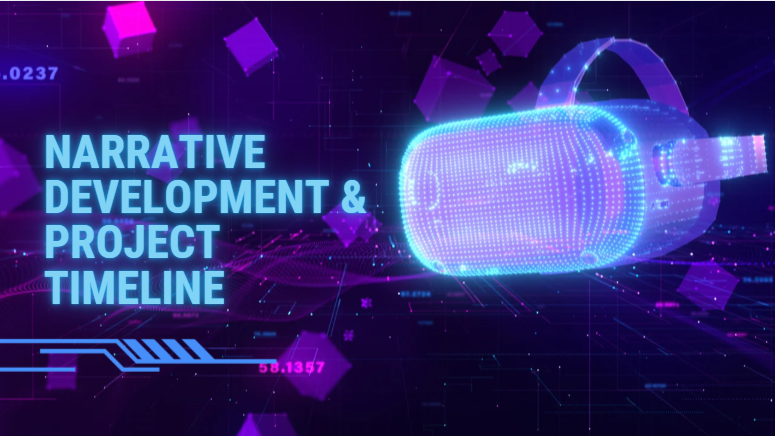
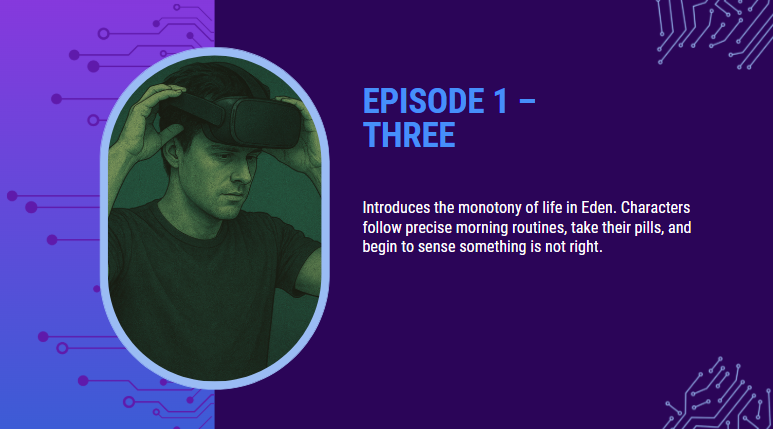
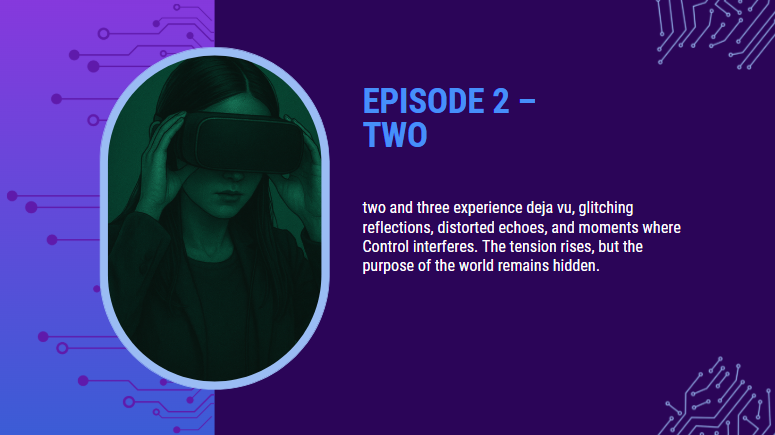
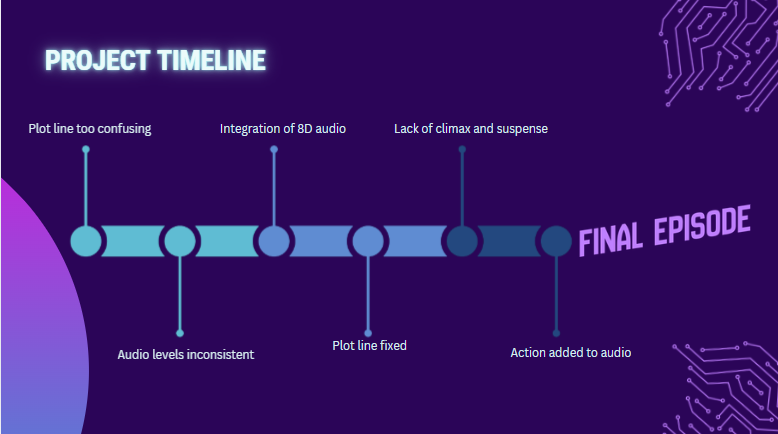
We structured the series as a gradual awakening.
Thematic Ideas
Our story draws on three major themes grounded in dystopian and posthuman theory.
1. Control vs Freedom
Citizens believe they are safe, but they are constantly monitored. This reflects modern surveillance systems smart devices, apps, and AI which offer convenience while quietly shaping behavior (Foucault).
2. Memory and Identity
The wellness pill echoes real-world debates on whether forgetting is survival. Identity in our story aligns with Donna Haraway’s idea of the cyborg self, fragmented and reconstructed by systems of power (Haraway).
3. Reality vs Simulation
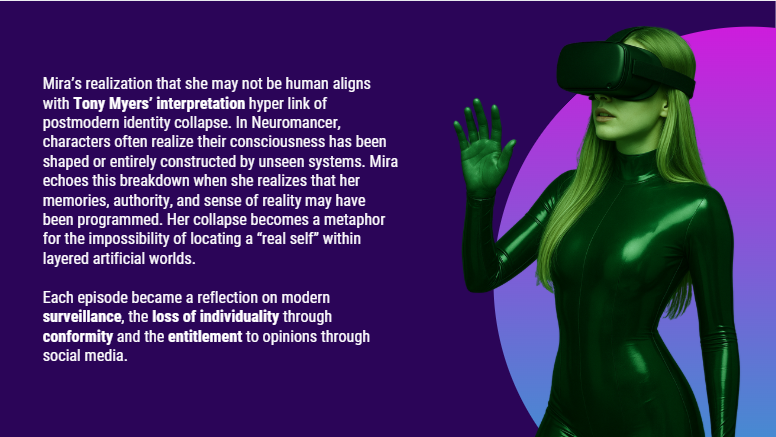
By the end, even the supposed “real world” is questioned. Agent Mira’s discovery that she herself is a construct turns the hierarchy upside down.
In a digital age, no one fully owns reality.
Our thematic approach also connects with academic research on cybernetics and postmodern identity. Ronald Kline’s work explains how early cyborg theory centered on “artificial homeostasis,” where organizations use technology to regulate human behavior and maintain stability.This directly parallels our simulation’s use of wellness pills, environmental loops, and CONTROL’s constant monitoring.
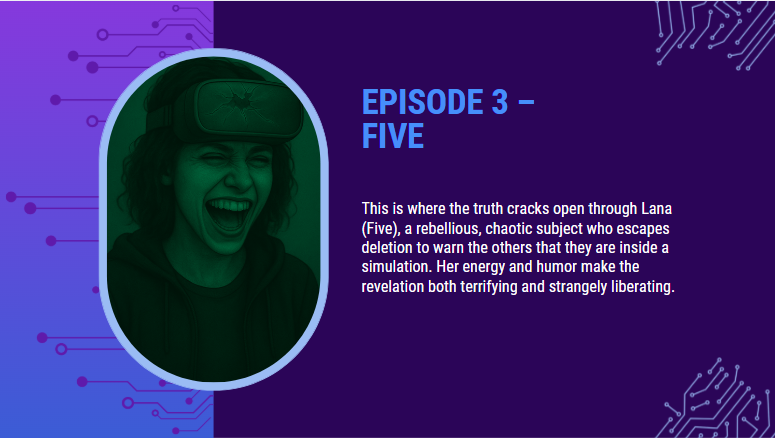
Likewise, Tony Myers’ analysis of Neuromancer emphasizes how identity becomes fractured when consciousness is mediated through artificial systems. This idea informed our portrayal of two fading memory, three mirror glitches, and Lana’s (five) emotional instability. The simulation constantly reframes their reality, pushing them toward psychological disorientation a classic postmodern cyberpunk effect.
Team Process and Collaboration
Our team consisted of three creators Shaeema, Batool, and Sakina and every episode reflects our collaboration.
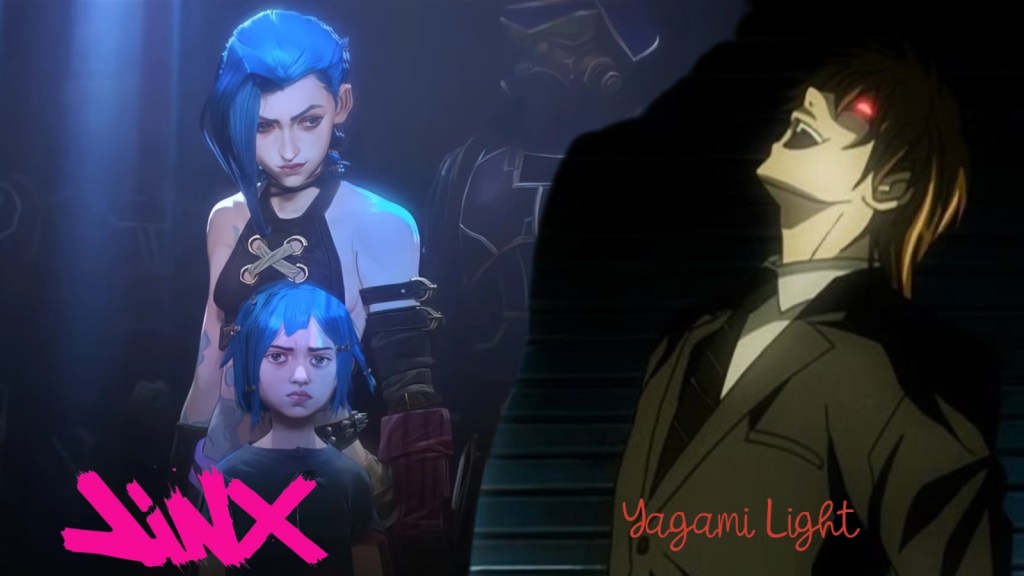
Shaeema took the lead on editing all three episodes and writing the first two. She built the initial sound design and pacing, making the environment feel sterile and controlled. She also developed the character of Lana (Five), drawing inspiration from jinx (Arcane) andLight Yagami (Death Note), blending chaotic emotional intensity with calculated brilliance.
As a group, we reviewed Episode 1 and 2 after multiple peer feedback rounds, improving clarity by simplifying overly visual descriptions and tightening the world logic.
For Episodes 3 and 4, Sakina took over scriptwriting, developing Lana’s emotional chaos and Agent Mira’s dramatic collapse.
Batool became the lead voice actor. Her tonal control helped ground the world emotionally.
We used:
- Repetition (alarms, footsteps) to show control
- Glitches to reveal memory breaks
- Silence as rebellion
- Layered machine hum to evoke surveillance
Peer feedback for Episode 3 According to the in-tutorial feedback session, some of Karim(two) & batool’s (three) parts seemed too distant, and the countdown needed more climax. For our final submission we tried to bring karim & batool ‘s voices to the foreground, and build more tension around the countdown.Fixing these taught us how sound position, breath pacing, and volume shape immersion in audio-only storytelling.
Reflection and Learning Outcomes
Working as a trio taught us collaboration, adaptation, and clarity. Early drafts were imaginative but confusing; through revision and feedback, we learned that clarity enhances creativity.
Engaging with academic research on cybernetics and cyberpunk deepened our world-building decisions. Kline’s analysis helped us conceptualize Eden as a regulatory system disguised as care, while Myers’ work guided our approach to memory loss, glitches, and identity breakdown. These academic frameworks strengthened our storytelling choices.
What We Would Improve in Future Episodes
the series continued, we would shift the narrative into the real world and explore what happens once the characters finally leave to go into the real world. A continuation would follow Two, Three, and Mira as they confront the broken society outside, a world far harsher than Eden. They would face the consequences of a failed utopia and begin rebuilding their identities in a world without artificial control. Perhaps they would reunite with Five / Lana in the real world, the system in the simulation does not kill people, just binds them into submission. It would be an exploration, that’s certain.
Conclusion
Across four episodes, we built a world that questions who controls whom and whether freedom can exist within a system designed to “protect.” Through this process, we transformed confusion into coherence, limitations into style, and theory into emotion.
In our world, even silence is listening.
Refrences
Baudrillard, Jean. “Simulacra and simulation.” U of Michigan P (1994).
O’Reilly, Shauna. The representation of technology and justice in Charlie Brooker’s Black Mirror. Diss. Institute of Art, Design+ Technology, 2024.
Foucault, Michel. “The history of sexuality: Vol. 1. An introduction (R. Hurley, Trans.).” New York: Pantheon (1978).
MOSES, KEERTHI. “The History of Gods: Plurality, Paranoia and Embodiment in Alex Garland’s Ex-Machina.” BAHRI PUBLICATIONS (2024) 50.1-2 (2024): 152.
Bhana, Aliyah. A posthuman exploration of the robot in contemporary science fiction films. Diss. University of Huddersfield, 2020.
Haraway, Donna. “Cyborg manifest.” Simians, Cyborgs, and Women. Londres: Free (1991).
Malenfer, Marc. “Erickson Dan, Severance, Série réalisée par Ben Stiller, avec notamment Adam Scott, Zach Cherry et Britt Lower, diffusée sur Apple TV+, février 2022, 9 épisodes.” Futuribles 450.5 (2022): 135-136.
Villeneuve, Denis, H. Fencher, and M. Green. “Blade Runner 2049, Warner Bros.” Pictures, Sony Pictures Releasing (2017).
Wachowski, Andy, and Larry Wachowski. “Directors, The Matrix.[Film].” US: Warner Bros (1999).
Kline, Ronald. “Where are the Cyborgs in Cybernetics?.” Social Studies of Science 39.3 (2009): 331-362.
Myers, Tony. “The postmodern imaginary in William Gibson’s Neuromancer.” MFS Modern Fiction Studies 47.4 (2001): 887-909.
Class 2.” BCM 325, University of Wollongong in Dubai, 1 Oct. 2025. PDF file.
“Deja Vu: Why It Happens.” YouTube, uploaded by Cleveland Clinic, 5 Dec. 2022, https://youtu.be/eGeQTQV6-os.
“Digital Identity: How It Works.” YouTube, uploaded by UK Home Office, 20 Mar. 2023, https://www.youtube.com/watch?v=c0RPmmakfUE.
“The Importance of Foley.” YouTube, uploaded by StudioBinder, 26 June 2018, https://www.youtube.com/watch?v=UO3N_PRIgX0.
UK Government. “Digital ID Scheme Explainer.” GOV.UK, https://www.gov.uk/government/publications/digital-id-scheme-explainer/digital-id-scheme-explainer.
BBC News. “Is Digital ID the Future?” BBC, https://www.bbc.com/news/articles/clyl3lzzed2o.
 making media