Understanding the Process Behind Barely20
Working on the Barely20 prototype as part of the leadership team gave me a clearer understanding of how collaborative media production actually works in practice. Rather than focusing on a single task, my role involved a combination of research, coordination, and support for the magazine’s overall direction.
A key part of my contribution was conducting research. I analyzed brainstorming worksheets from multiple student groups, which acted as a form of primary research. While each group approached the task differently, there were clear patterns that kept appearing. Many students described their 20s as uncertain, overwhelming, and defined by self-discovery. It became clear that being barely20 is less about having everything figured out and more about navigating different responsibilities at the same time.
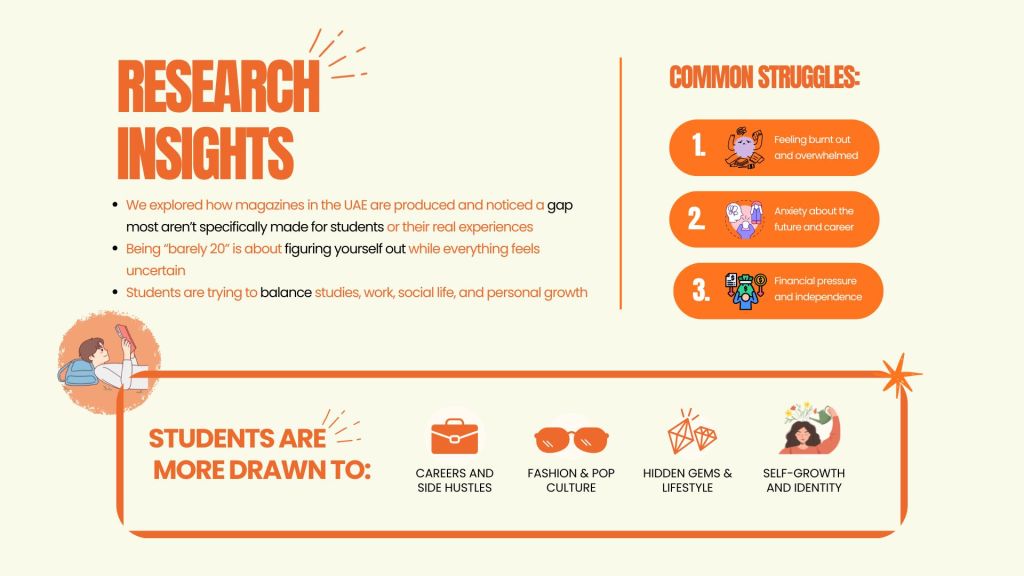
Across the worksheets, several common struggles were repeatedly mentioned. These included burnout, financial stress, and anxiety about future career paths. What stood out to me was how consistent these responses were, showing that these experiences are shared rather than individual. In addition to this student life in Dubai was often described as fast-paced, expensive, and competitive, but also full of opportunities. This contrast helped shape how we approached the tone of the magazine.
Alongside this primary research, I also explored existing magazine production in the UAE as a form of secondary research. From this, I noticed that many magazines focus on lifestyle, trends, or luxury, often presenting highly curated content. However, there is limited representation of student experiences or everyday realities. Identifying this gap became important in shaping our concept, as we wanted Barely20 to feel more honest and relatable rather than overly polished
These research insights directly influenced the direction of the magazine. Instead of presenting a perfect version of life in your 20s, we aimed to create something that reflects the process of becoming. This aligns with our concept of Barely20 as a coming of age magazine focused on growth, identity and uncertainty. It also influenced the type of content we included, such as hidden gems, self-growth, fashion and pop culture but presented in a way that feels more personal and authentic.
In addition to research, I was actively involved in coordination within the leadership team. I participated in meetings with other group leaders, where we discussed ideas, clarified directions and worked towards aligning the overall magazine. I also supported individual group leaders who reached out for guidance helping them refine their ideas when needed. This experience highlighted how important communication is, especially in a project involving multiple teams.
I also contributed to outreach efforts by contacting potential brands for advertisements in the magazine. This added a more practical, industry-focused aspect to the project, showing that media production goes beyond just content creation and also involves external engagement.
Within the prototype, the leadership group was responsible for key sections such as the front cover, back cover, table of contents, editor’s note, sticker page, and the “Meet the Team” spread. These elements played an important role in establishing the overall structure and identity of the magazine . While the design execution was mainly handled by designers within the team, my role focused more on research, coordination, and supporting the overall direction.
One of the main challenges I faced was ensuring that everyone had a clear and shared understanding of the overall vision for Barely20. With so many groups involved, miscommunication became quite common. At times, ideas were interpreted differently, which led to inconsistencies in direction. There were also challenges within the leadership team itself particularly between designers and other members. Designers were working closely with individual groups to refine their content, but these updates were not always communicated back to the rest of the team which sometimes resulted in overlapping ideas or conflicts.
Another challenge was reaching agreement within the leadership group. With multiple perspectives, it was not always easy to put forward an idea while also listening to others and working towards a shared decision. However, this process helped develop important collaboration skills, such as active listening and adaptability.
To address these challenges, we introduced a more structured system by documenting feedback and updates from each group meeting in a shared Google document. This helped improve communication and ensured that everyone stayed aligned. This experience showed me that effective collaboration is not just about sharing ideas, but also about creating systems that support clear communication.
Overall, this project helped me understand the importance of combining research with creative decision-making. It also showed me that collaboration involves both challenges and learning opportunities. By grounding our ideas in research and improving our communication process, we were able to create a concept that feels more authentic and reflective of real student experiences.
 A portfolio of media, stories & student work